
100-400mm Lenses: Everything You Need to Know
In this guide, we’re diving deep into how to shoot with the 100-400mm lens and why it might just be the secret weapon missing from your kit. If you’ve ever wanted to make faraway mountains look epic, capture wildlife like you’re on safari, or just compress the heck out of a background, this lens is the ticket.
While it doesn’t have a permanent place in my bag (I tend to favor more lightweight and versatile gear), the 100-400mm is undeniably fun and powerful. Whether you’re thinking about adding one to your kit or just want to understand what this focal length can do, I’ve got you covered with tips, comparisons, and gear recommendations.
Why Choose a 100-400mm Lens?

The Sweet Spot of Reach + Flexibility
The 100-400mm focal range gives you incredible reach without being as massive or expensive as a super-telephoto prime. It’s a top choice for adventure photographers, wildlife enthusiasts, and landscape shooters who want to compress a scene or isolate a subject from afar. Telephoto lenses have a narrow field of view, making them ideal for isolating subjects from their background.
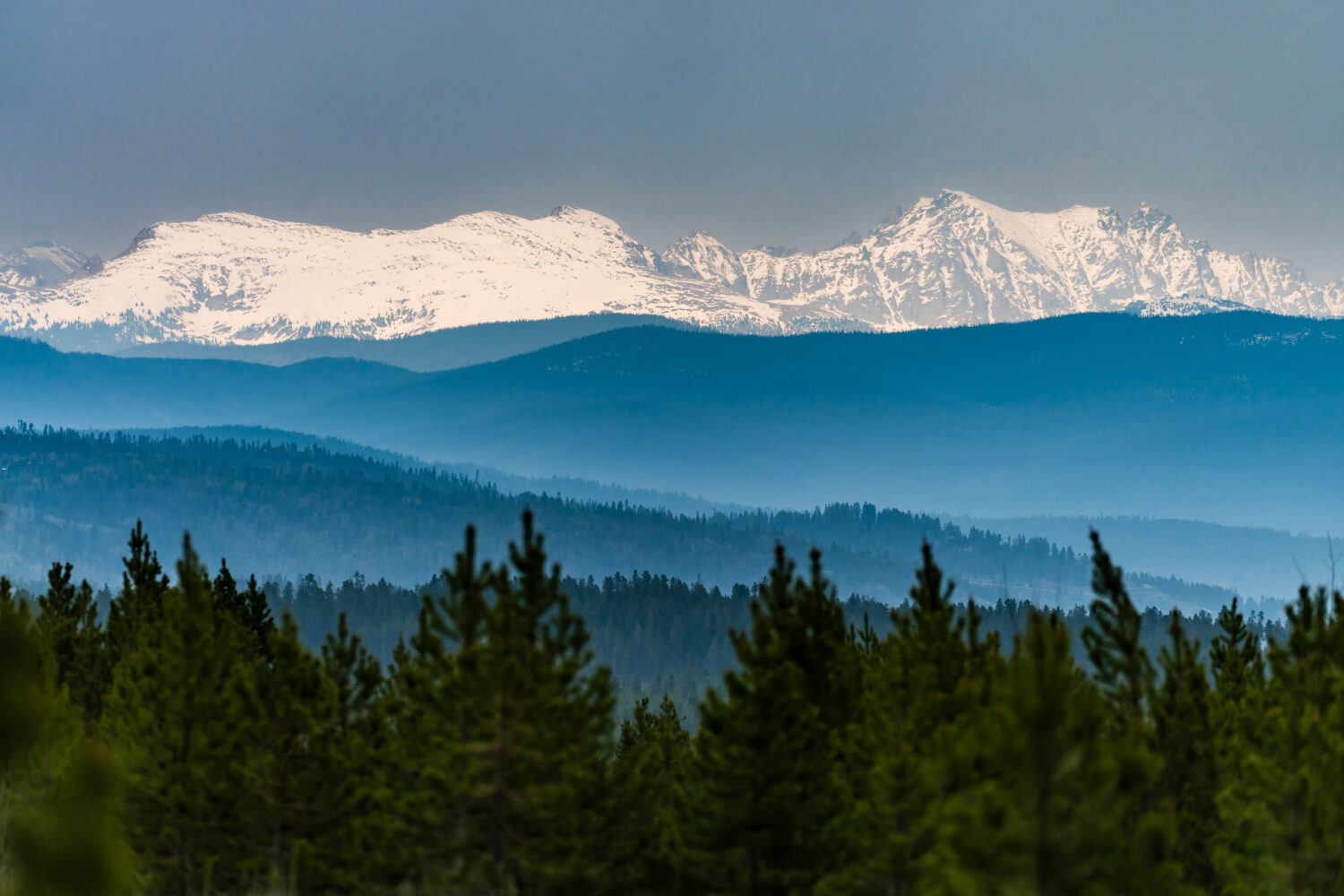
One of the magic tricks of this lens is its compression effect—it pulls the background visually closer to the subject, creating a dramatic and cinematic look. It also gives you shallow depth of field, even at narrower apertures like f/5.6 or f/8 when zoomed all the way in.
Sure, it’s bigger than your walkaround 24-70mm, but it’s still handholdable, hikeable, and surprisingly travel-friendly when packed well (Especially Canon’s newer RF version). If you’ve ever been frustrated by not being able to “get close enough,” this lens is the answer.
When Should You Use a 100-400mm Lens?
This lens truly shines in:
- Wildlife Photography – Capture behavior from a distance without disturbing the subject.
- Adventure + Lifestyle Photography – Isolate skiers, hikers, or surfers against dramatic backgrounds.
- Candid Portraits – Snap emotional moments without interrupting the action.
- Travel & Landscape Photography – Pull distant layers together, focus on textures, and create a different kind of drama than wide-angle lenses offer.
- Outdoor Events & Sports – Get up-close action shots even if you’re shooting from the sidelines.
If you’re typically a wide shooter, the 100-400 can add depth and diversity to your portfolio by showing the world through a tighter, more intentional frame.
Alternatives to the 100-400mm Lens
Not sure if the 100-400mm is the best fit? Here are a few other options to consider:
70-200mm
This lens is more versatile in tighter or more everyday environments, especially when working closer to your subject. It often has a wider max aperture (like f/2.8), making it better in low light or for portrait-style bokeh. That said, it just doesn’t have the same reach as the 100-400.
Telephoto Primes (300mm or 400mm)
Prime lenses in this range offer incredible sharpness and faster apertures, but they’re heavy and specialized. Unless you’re regularly shooting sports or wildlife, a prime may be more lens than you need—and less flexible than a zoom.
Standard Zooms (24-70mm / 24-105mm)
These are great for general shooting or storytelling in tighter spaces. You’ll likely want a standard zoom in addition to your 100-400—not instead of—if you want to be prepared for both environmental shots and telephoto drama.
Tips for Shooting with a 100-400mm Lens

1. Use a Fast Shutter Speed
Zoomed-in shots magnify even small camera movements. For handheld work, aim for 1/500 or faster. If your subject is moving, crank it up to 1/1000 or more to freeze the action. Effective use of a telephoto lens requires careful management of shutter speed to avoid motion blur.
2. Leverage Image Stabilization
Use IS (or VR/OSS, depending on your system) when shooting handheld. Turn it off on a tripod to avoid micro-vibrations from the stabilization system. Some lenses incorporate different modes of image stabilization, including a mode for panning and a mode that activates stabilization only during exposure. Image stabilization does not stop the movement of the subject, which can still lead to motion blur if the subject is moving rapidly.
3. Don’t Be Afraid to Shoot Wide Open
Even at f/5.6 or f/8, shooting at 400mm can give you a gorgeous, compressed background blur. Don’t stress about not having f/2.8—you can still create stunning, dreamy images. Telephoto lenses can create a pleasing background blur when isolating a subject, enhancing bokeh effects.
4. Watch Your Background
Since telephoto lenses pull backgrounds into the frame, make sure the backdrop adds to your story. Whether it’s a mountain range, texture, or light pocket, be intentional about what’s behind your subject.
5. Explore Composition Techniques
Use the lens for both subject isolation and environmental layering. Play with foreground elements, experiment with framing, and try zooming for composition changes. With this much range, you can go from mid-shot to ultra-tight without switching lenses.
6. Zoom Intentionally
We often say “zoom with your feet,” but at 400mm, you’d better pack some running shoes. Use the zoom to your advantage, especially when you’re physically limited in how close you can get. And use the zoom for variety.
7. Other Tips: ISO, Tripods, and Extenders
Higher ISO settings may be necessary in lower light when using a telephoto lens with slower maximum apertures. Using a monopod or tripod can enhance stability and sharpness when using a telephoto lens (and take the weight off your arms). Extenders can be used with telephoto lenses to increase focal length, but may impact autofocus speed and cost you in terms of light transmission (1-2 stops usually). However, many telephoto lenses, including the 100-400mm range, have been designed to accommodate extenders without sacrificing image quality.
100-400mm Lens Recommendations
A lightweight telephoto lens is preferable for long outdoor shoots. Here are a few of the best options out there, whether you’re just starting or going all-in:
Canon RF 100-400mm f/5.6–8 IS USM – Buy Here
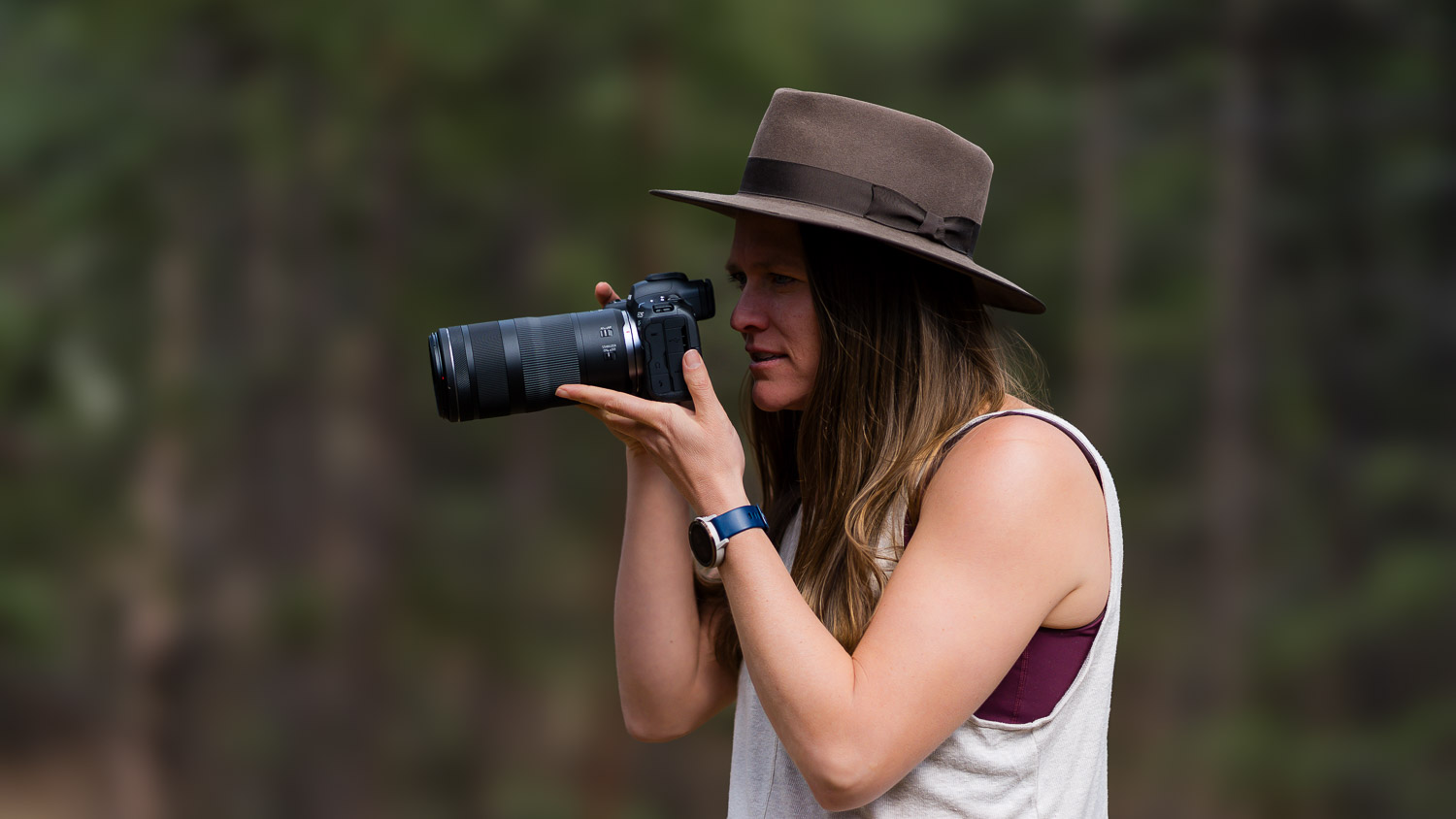
Check the latest price on this lens here.
- Lightweight and budget-friendly
- Great for hobbyists and travelers
- The Canon RF 100-400mm is considered a great option for casual wildlife and sports photographers.
- The Canon RF 100-400mm lens is noted for its affordability and high performance in comparison to Canon’s more expensive L series lenses.
- The Canon RF 100-400mm performs well in good lighting conditions but struggles in low light.
- The Canon RF 100-400mm has an f/8 aperture at its 400mm end.
- The autofocus on the Canon RF 100-400mm is quick and reliable, even in challenging conditions.
- The lens is lightweight compared to other telephoto lenses of similar range, weighing 55.4 oz.
- The lens has a minimum focusing distance of 3.5 feet, allowing for close-up shots.
- Many telephoto lenses, including the Tamron 150-600mm, have less impressive minimum focusing distances.
- The lens features a zoom lock mechanism that is intuitive and easy to use.
Canon EF 100-400mm f/4.5–5.6L IS II USM
Check the latest price on this lens here.
- A classic workhorse – Professional build, sharp optics, fast AF
- Works well on RF bodies with an adapter
- The Canon EF 100-400mm L IS II is praised for its excellent image quality. Customers praise the sharpness of images produced by the Canon 100-400mm lenses across the focal range.
- The Canon EF 100-400mm L IS II performs well in low-light conditions due to its superior autofocus technology.
- The image stabilization in the Canon 100-400mm lenses is considered very effective, allowing for sharp images at slow shutter speeds.
- The image stabilizer system in lenses provides an effective stabilization of up to 4 stops for better handheld shooting.
Sony FE 100-400mm f/4.5–5.6 GM OSS
Check the latest price on this lens here.
- Incredible sharpness, stellar autofocus
- A favorite among Sony wildlife and sports shooters
- The lens produces shots with strong color rendering and contrast under good lighting.
- The Fast autofocus capabilities of this lens are essential for shooting fast-moving subjects.
- Modern image stabilization systems improve effectiveness significantly at longer focal lengths to counteract motion blur.
Nikon Z 100-400mm f/4.5–5.6 VR S
Check the latest price on this lens here.
- Lightweight for the reach
- Excellent sharpness and VR performance
Sigma 100-400mm f/5–6.3 DG DN OS sony E (there is also a Canon EF and Nikon F mount)
Check the latest price on this lens here.
- Budget-friendly entry to the range
- Good image quality for the price
Tamron 150-600mm f/5–6.3 Di VC (Canon, Sony,
Check the latest price on this lens here.
- Another budget-friendly option with a little more reach.
- Good image quality for the price
- The Tamron 150-600mm has a longer minimum focus distance compared to the Canon 100-400mm lenses.
Final Thoughts on the 100-400mm Focal Length
If you’ve got a 100-400mm—or you’re thinking of adding one to your kit—get out there and stretch it to its full potential. Shoot something far away, compress your background, and create drama that wide lenses just can’t replicate.
Let me know in the comments what you love shooting at 400mm—or if you’re still deciding which telephoto lens is right for you. And if you’re curious about lens sharpness and performance, be sure to check out my next video on the sharpest lenses you can buy.
Until then—get out, create, and shoot adventurously.
In this guide, we’re diving deep into how to shoot with the 100-400mm lens and why it might just be the secret weapon missing from your kit.