Critera for Choosing Camera Gear for Photographers
Welcome to my blog post on criteria for choosing camera gear for photographers! We’ve been working hard on content to help photographers be smarter with their money. One of the biggest business expenses we have is camera gear.
In this guide (or check out the YouTube video) we’ll walk through the criteria to help you choose camera gear. Choosing the right equipment instead of just the shiny camera gear will have a positive impact on your business. Be sure to check out our money and gear guide for more tips, sample kits, and a checklist to walk you through this process.
How to Choose What Photography Equipment You Need
I recently published an article with a Professional Photography Equipment List for Beginners. It breaks down all the different types of photography equipment and helps you determine what to get based on your overall budget. In this article, I’m going to help you come up with your own criteria for choosing photography equipment based on my years of experience as a professional photographer and the many gear reviews that I’ve done for blogs like ShotKit and Fstoppers.
So what is my criteria for choosing camera gear?
We’ll start with narrowing down a few topics from your photography genre to chosen brand of camera. Then eventually I’ll break down features you should look for in cameras, lenses, and accessories.
Gear Based on the Type of Photography You Shoot
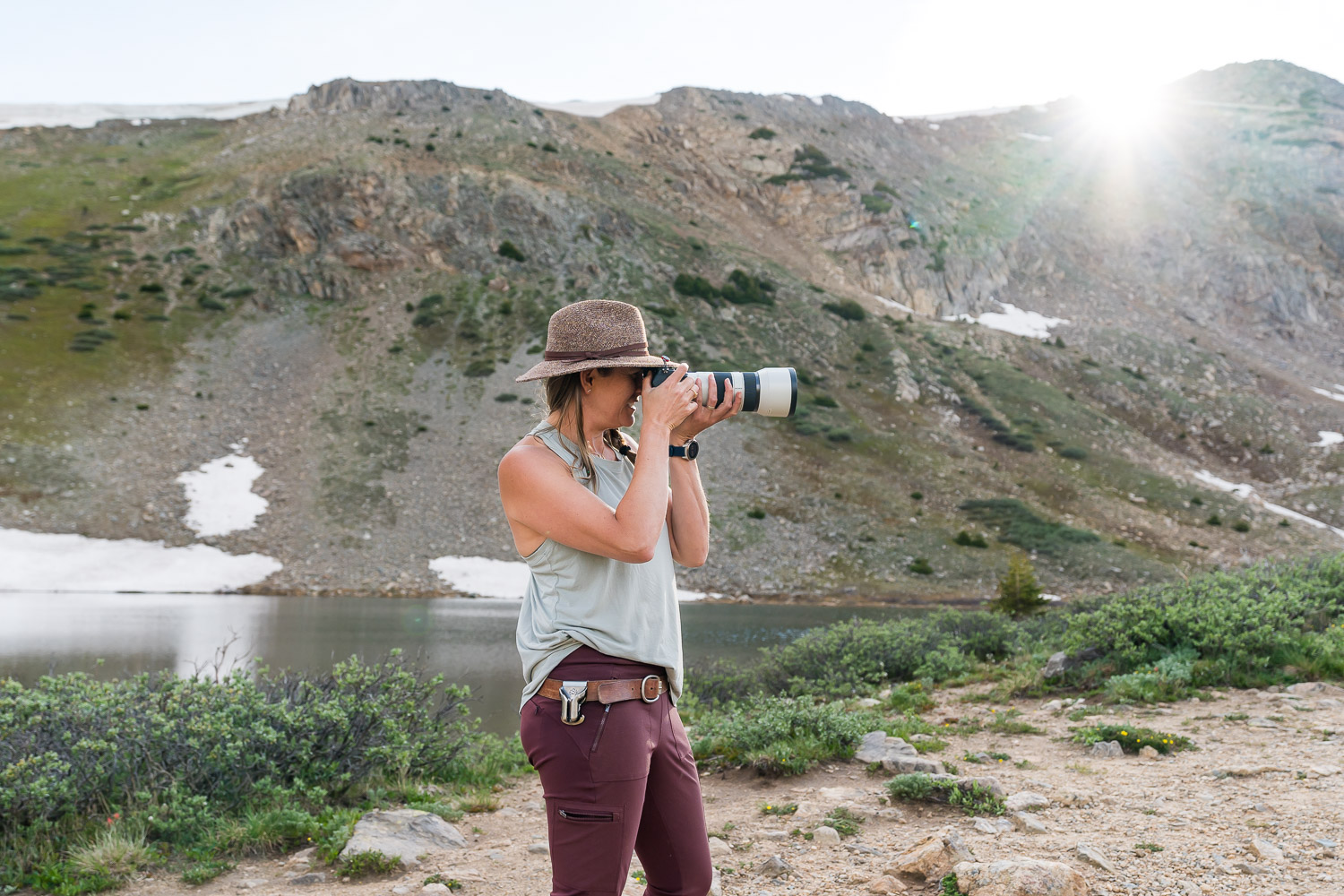
The first step in our criteria for choosing camera gear is to determine what type of photography specialty you’ll be focused on. Wedding, portrait, commercial, adventure, and landscape photography all have different photographic equipment needs. While some things are going to remain the same, you’ll likely be choosing different lenses, camera bags, and accessories.
To have a successful photography business you’ll need to choose your equipment wisely.
Choosing a Camera System
The first thing item you’re going to want to select is a camera. There are lots of choices from lots of different brands from a beginner camera to advanced ones. The majority of people will be looking at Sony, Canon, and Nikon. There are other brands such as Fuji, Panasonic, Leica, etc but they are not nearly as mainstream as the top three.
Currently, Sony and Canon dominate the market so they are likely to provide the best value and have the best used market if you’re interested in shopping used.
Between Canon and Sony, it is a clear choice for me: Sony
While Canon has a loyal following and makes great cameras, Sony is slightly more innovative and has a larger selection of lenses for their mirrorless system. There are also a lot of third-party lenses available from brands like Sigma, Tamron, and Samyang.
Full Frame or Crop Sensor
While some people would consider a crop sensor camera option, I’d encourage most people to look at full frame cameras. Sensor size is a big debate but my recommendation is to get the nicest full frame camera that fits in your budget.
APS-C (crop sensors) are fine but if you take your photography seriously, you’ll eventually want a full frame camera. I’d take an older generation full frame camera over a crop sensor any day.
The biggest thing about full frame bodies is that they have better lens options. Lenses will be higher quality and you won’t have to do any focal length math.
Determining Your Priorities
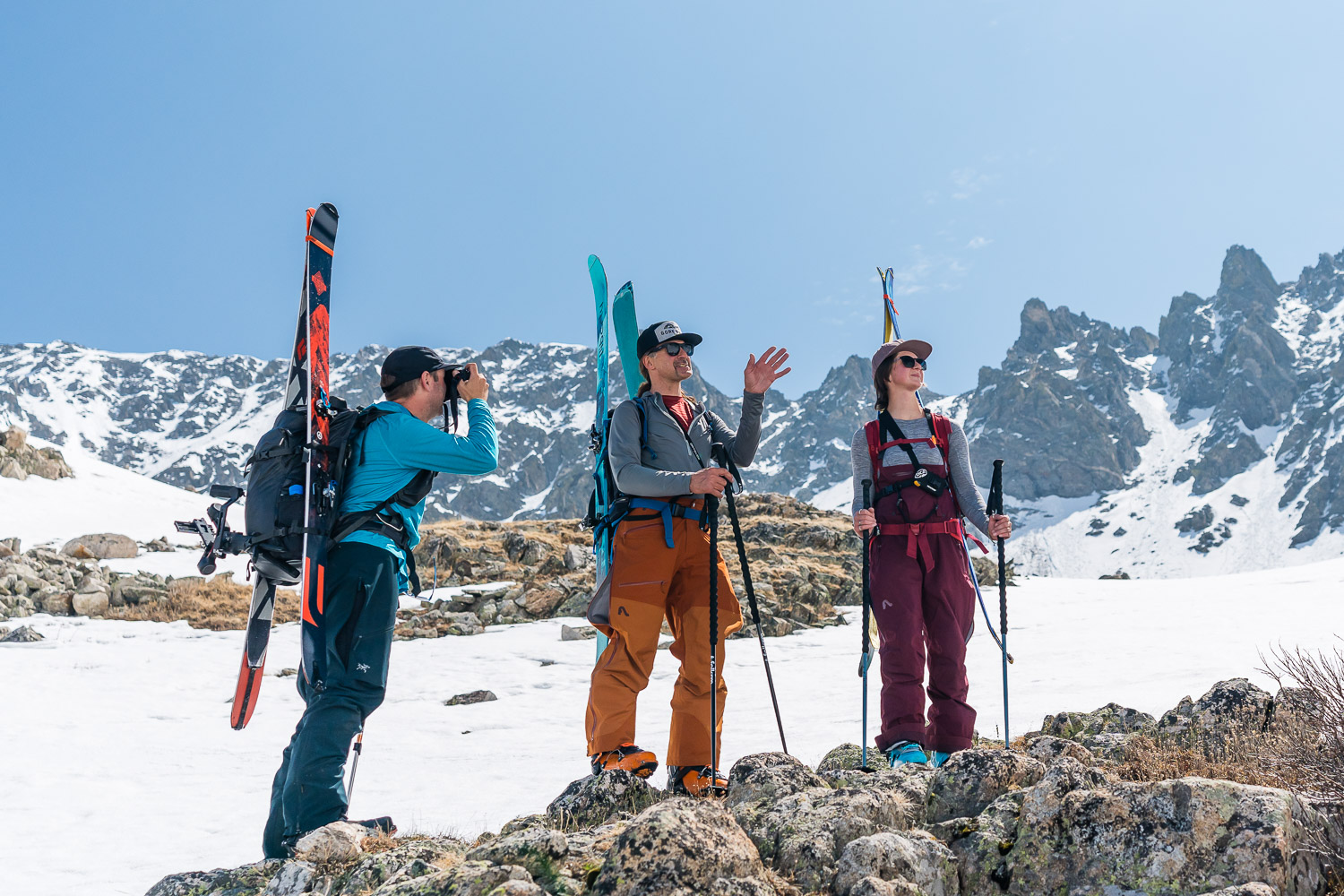
Now that I’ve offered up a bunch of camera options, it’s time to talk through some characteristics that will help you refine your decision on what camera is best as well as what lenses and other gear you’re going to add to your kit. A lot of decisions go into basic photography equipment so it’s important to factor in the right information.
Size and Weight
For some people, the size and weight of their photography equipment will be extremely important. Are you traveling to far-off locations or shooting in a studio? Maybe you need the lightest smallest kit because you’re going on international flights or maybe you need the best camera for the job regardless of its size.
For me, I take my kit to far-off places but I also want the best quality images possible. This balance is tricky to find.
Durability
Most modern photography equipment is quite durable. I’ve been using my Sony A7III for over 6 years and it still works great! If you respect your cameras, they will last a long time. This is one of my top criteria for choosing camera gear.
This was something I used to be concerned with but I’ve realized that cameras are much more durable than I give them credit for. And when I break them, I send them to a repair facility and they are usually working again within a week.
Quality
Getting a good quality camera is essential. The best thing to do in this regard is to stick with a name brand (Sony or Canon) that has a long track record of quality products. Most mainstream camera bodies (especially the ones listed above) are going to give you solid image quality and performance.
When it comes to lenses, quality can be more varied. Again, if you stick with name brands, you’ll get good results. When you start venturing into third-party lenses, it can be varied. For a beginner photographer, that super cheap lens might be tempting but I’ve found you tend to get what you pay for.
An off-brand prime lens will often have better quality than zoom lenses. Do your research and read or watch a lens review before clicking the buy button.
Battery Life
The battery life of cameras can be a concern but most modern cameras have reliable batteries. Sony was once known for their short battery life but they fixed this issue completely when they started using the NP-FZ100 batteries.
Canon has always had good battery life cameras.
My one suggestion when it comes to batteries is to avoid the knock-offs. In my experience, you’ll always get much better performance from name-brand batteries.
Cost and Value
The cost and value of photography equipment is always a balancing act. Will your clients know that you shoot with the highest quality lenses or will they notice that your camera is a few years old? Short answer: No, they won’t.
Get the gear that fits in your budget and only upgrade when you have the money! That old Canon EOS 5D was once used to shoot ad campaigns and billboards, don’t get too caught up in the hype of the latest/greatest cameras.
This is probably the most important criteria for choosing camera gear. You can’t exceed your budget. Therefore you need a budget before you can select camera gear.
Brand
Some photographers care about specific camera brands whereas others don’t have any brand loyalty yet. If you grew up shooting Nikon, a Canon camera might not feel as comfortable to shoot with. Switching brands is tough.
I personally don’t really care what brand I use, as long as they are producing good quality gear that can meet my demands.
Separating Needs versus Wants
This is often one of the hardest things to do. Camera accessories are fun and it’s easy to get a bad case of GAS (Gear Acquisition Syndrome). The defining characteristic for me is: will the item save me significant time/effort or make me money?
If the answer is Yes, I buy it. If the answer isn’t clear, I take a hard look to see if I can justify it. Getting your needs and wants straight will save you money, lower your stress level, and simplify your life.
Talk to any photographer and they will tell you about the gear they bought on a whim and never used. Don’t be that person.
Weighing Cost versus ROI
Certainly, there is an equation of ROI (return on investment) for photography equipment. Getting an old DSLR camera and selling images to a bunch of clients will have a better ROI than dropping $6000 on a Sony A1 and never getting a client.
Keep this in mind when you buy photography equipment.
Shopping for the Essential Photography Gear
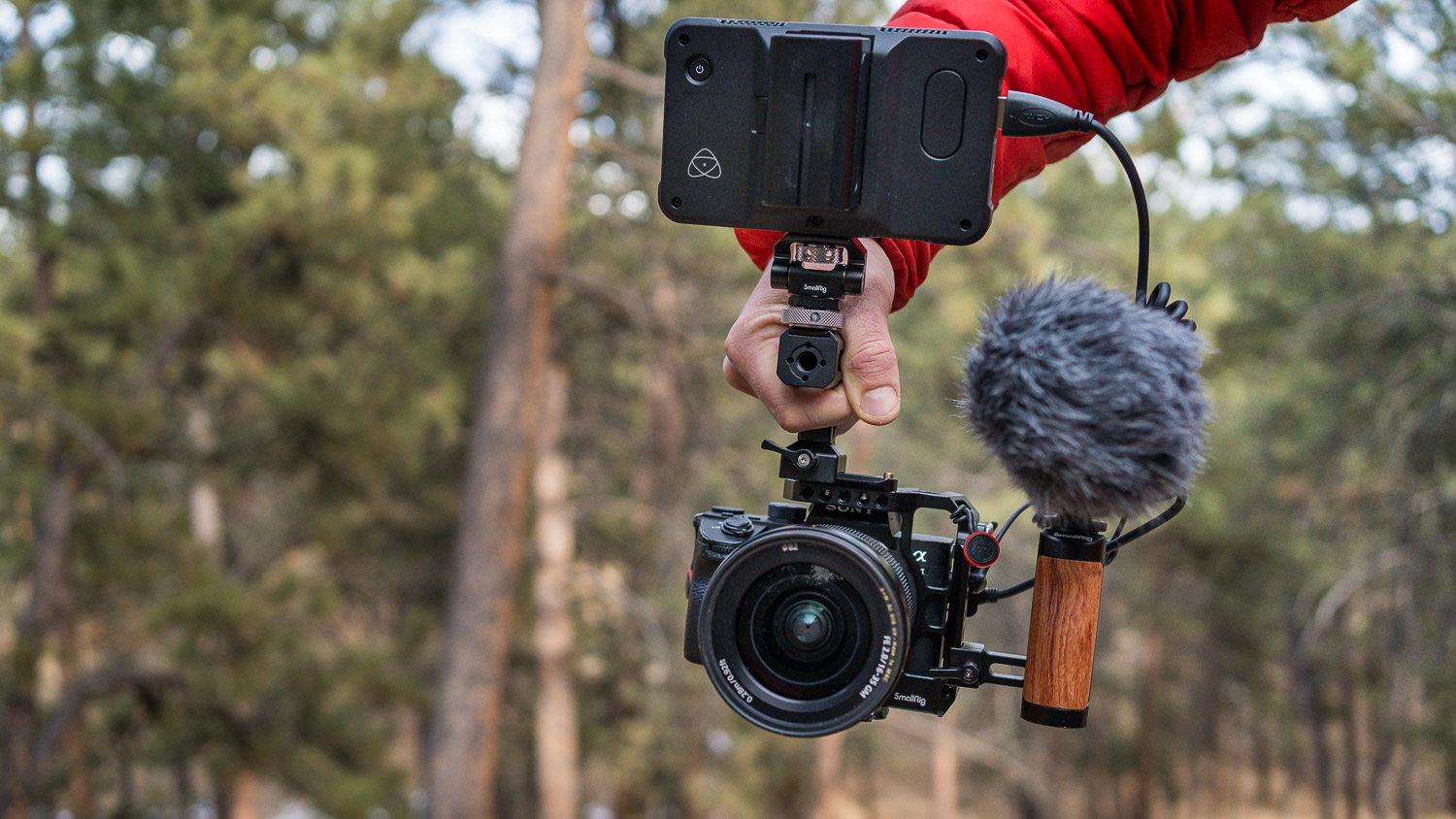
Let’s go shopping, below I break down criteria for choosing camera gear and then share some samples. Be sure to download the money and gear guide for sample kits based on your budget. This is my favorite gear based on various budgets and the criteria I outline below.
First up, Cameras
There are a lot of features and marketing that get thrown around when it comes to cameras. There is always a new camera being released and it can be overwhelming to decide what is right for you.
My criteria fall into two main categories –
Ease of Use & Features
Within those, there are a variety of factors to consider:
First, Ease of Use:
This comes down to 9 factors:
- Size/Weight: This is why I switched from Canon DSLR to Sony Mirrorless.
- Mirrorless viewfinder (see before you take a photo): This makes exposure more accurate and saves editing time.
- Buttons / Dials / Menu: How user-friendly are the controls? Pro cameras will have a dedicated dial for Shutter Speed, Aperture, and ISO. This makes shooting in manual much faster.
- Flip Screen: I like this for shooting overhead or low-angle verticals
- Autofocus: Basically any camera in the last 5 years from Sony, Nikon, or Canon will be solid
- Customization: Can you set the buttons to what you need quick access to?
- Battery life: Changing batteries is a hassle, batteries can be expensive too.
- Compatibility w/ third party lenses and flash systems: Are there affordable lenses and flashes (i.e. Godox)
- Durability: Will it hold up to abuse? Weather? dust?
Next, Features:
- Image Quality – (Dynamic Range, Megapixel Count, High ISO Performance, Color)
- IBIS – this is helpful for video & getting sharp images at lower shutter speeds
- Dual card slots – arguably essential for pros
- Video Specs – this is a whole category on it’s own but if you shoot video, does it easily capture both photo & video – most photographers will want to capture video at some point
Top Quality Camera Bodies
Now my somewhat biased opinions have directed you toward a Sony camera body, which one do you want to get? The top three most expensive choices are as follows:
Sony A7IV – an excellent all-around camera for photography and video
Sony A7RV – a high-resolution camera (61 MP) that is well suited to landscape or commercial photographers who need the most resolution possible
Sony A7SIII – a lower resolution (12 MP) camera with great low-light performance and video performance
While these cameras are all excellent, it may be worth considering an older version of each of them if they exceed your budget. We started our photography business with older cameras and didn’t buy nice ones until we had some cash flow.
Budget Camera Bodies
To meet your budget, you may need to consider looking at an older camera body. Keep in mind that the 5-year-old camera was once the latest and greatest that all the pros were using. Check out the following:
Sony A7II or A7III – all-around excellent camera, the version 3 has a larger battery which is much nicer
Sony A7RII or A7RIII – both great cameras that offer high-resolution sensors
Sony A7SII – a great camera for low light or video
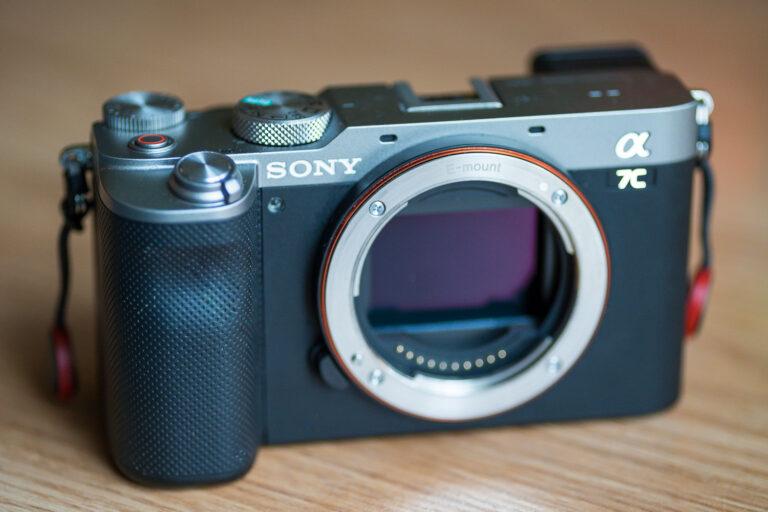
Sony A7C or A7C II – a super compact full-frame camera
Lower Budget Camera Bodies
If you’re still struggling to fit one of the above cameras in your budget, you could consider a crop sensor camera. I used the Sony a6000 for years as a daily camera because it is so small and compact.
The main thing to think about is your lenses. I recommend getting some full-frame compatible lenses so that when you upgrade your camera body to full frame, they still work.
Sony a6600 – a solid APS-C camera that uses the larger Sony batteries
Sony a6000 – the OG Sony APS-C camera that is one of the best bang for your buck cameras, a great beginner camera
Choosing Camera Lenses
When it comes to lenses – I’m basically balancing cost with performance. With lenses, performance means image quality.
Professional photographers will likely want a range of focal lengths from 16mm to 200mm. This can be accomplished via prime lenses (fixed focal length) or zoom lenses (variable focal length).
The advantage to zoom lenses is their versatility but prime lenses are often better in low light, have nicer bokeh, and tend to have better image quality for the price.
Can I get above a certain threshold of image quality while sticking to my budget? There are a lot of mid-range lenses for Sony E-mount that provide a solid balance of price/quality. Sure you can get the top-of-the-line option but when we were switching to mirrorless several years ago, Canon didn’t have very many lenses and they were very expensive.
In terms of image quality, the main thing you want to look out for when choosing a lens is making sure it performs well in terms of having.
Criteria for Choosing Camera Lenses:
- Solid build quality
- Good Sharpness
- Fast Autofocus
- Compact Size/weight
- fast aperture (f/2.8 or f/4 for zooms, f/1.8 or faster for primes)
- Minimizing Vignetting
- Minimizing Color Fringing or Abbertion
- And beautiful Bokeh
Check out some of our favorite lenses in our free money and gear guide.
Criteria for Choosing Camera Accessories
Finally, here’s my thoughts on choosing your camera accessories.
Choosing Memory Cards
Don’t forget these are essential. Most modern professional cameras will have two slots so you’ll need several memory cards so you have backups when the first ones fill up. I’ve been using 128GB cards and I recommend buying these from a reputable company.
The last thing you want is a corrupted memory card, trust me I’ve been there.
Choosing Camera Batteries
Getting a few extra batteries will give you the ability to capture longer days. These are not fun to buy but they are essential photography equipment.
You might get away with a power bank and a charger but having a handful of batteries is much easier.
Choosing Camera Filters
Whether it is polarizing filters or variable neutral density filters, you’ll want to factor this into your budget. You can save money here by buying a larger filter with a step-up ring to fit each of your lenses. Having a filter for each lens is nice but costly.
I use polarizing filters almost all the time (except indoors and at night). A good variable ND filter will be helpful for keeping your shutter speed down while capturing video.
Skip the UV filters to protect your lenses. If you’re worried about scratching your lens, use a lens hood.
Choosing a Camera Backpack or Carrying Case
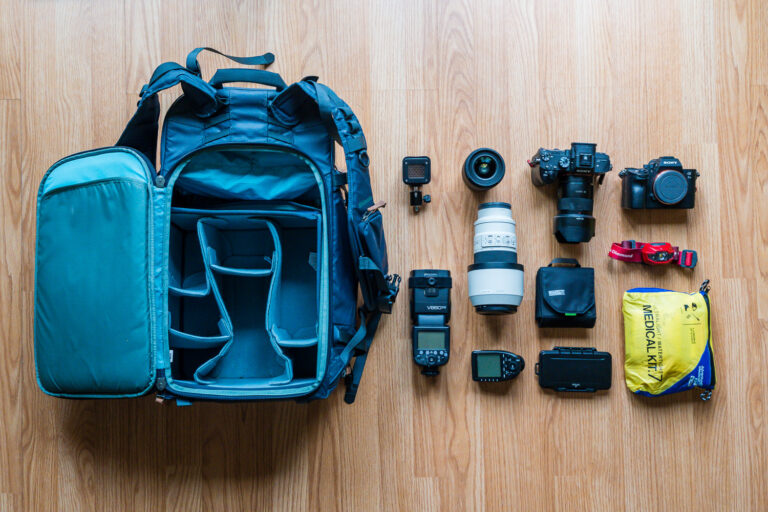
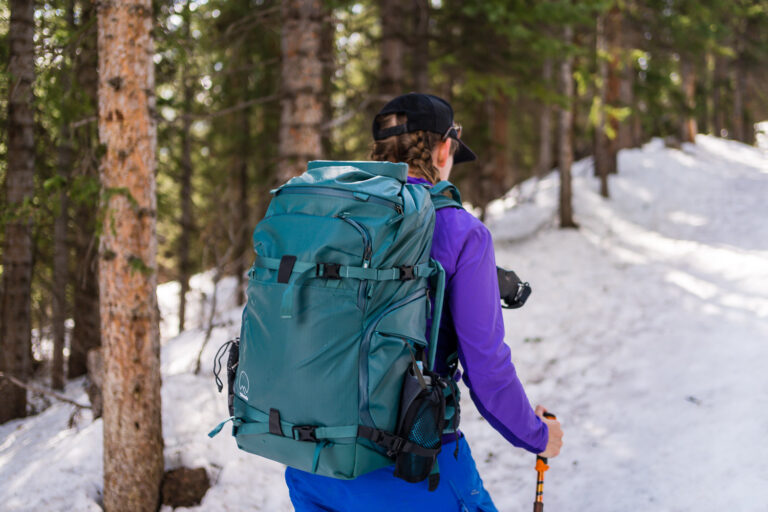
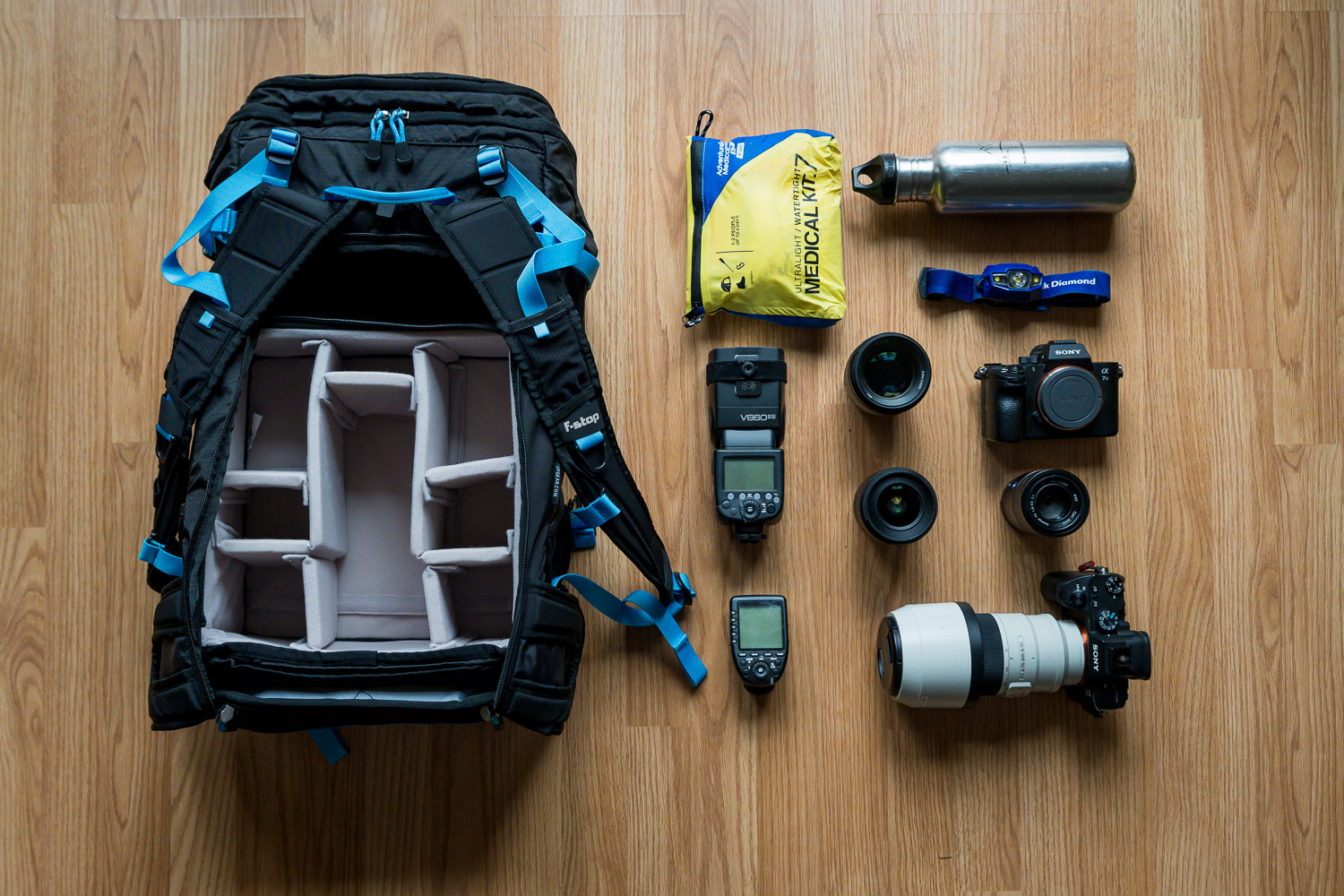
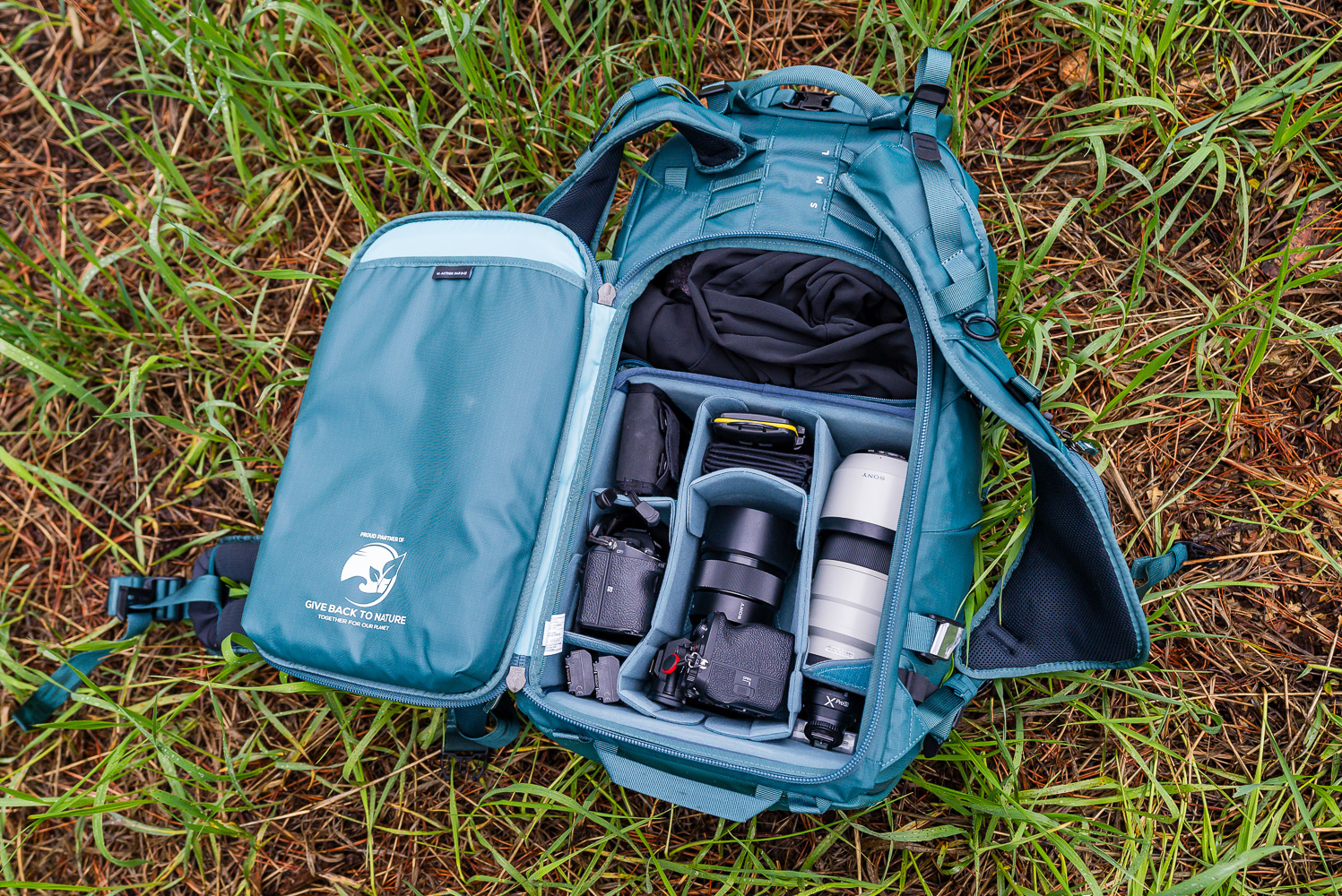
Getting a solid camera bag can keep your equipment safe and make it easier to transport. If you’re primarily working from a vehicle or indoor location, a rolling bag might be a good option. Hard cases are nice for harsh environments.
External Flash for your Camera
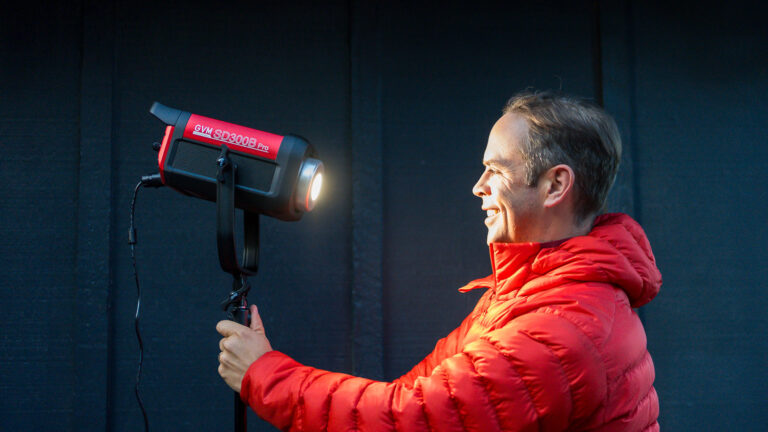
Getting proper lighting equipment is a huge topic but for portrait/commercial/wedding photographers I’d start with a simple off-camera flash setup. Once you learn more about what you like about photography, you’ll be able to learn more about lighting and refine your equipment list.
Light Stands for your Flashes
A simple travel light stand for your off-camera flash is very handy. We use ours all the time to hold a light and capture more dynamic images. If you’re in a studio, C-Stands might be more suitable but they are heavy/bulky.
This is another category where you’ll learn more as you grow and decide what additional equipment is right for you.
Cleaning Kit for Your Camera Gear
Nobody wants to spend time digitally removing sensor dust from photos. Instead, get a cleaning kit for your sensor, lenses, and camera. Cleaning a digital sensor is intimidating at first but is much quicker than cloning out a dust spot from all your images.
You may not notice how dirty your sensor is until you shoot at f/8 or higher. Be sure to check before important photoshoots.
More Camera Accessories and Gear
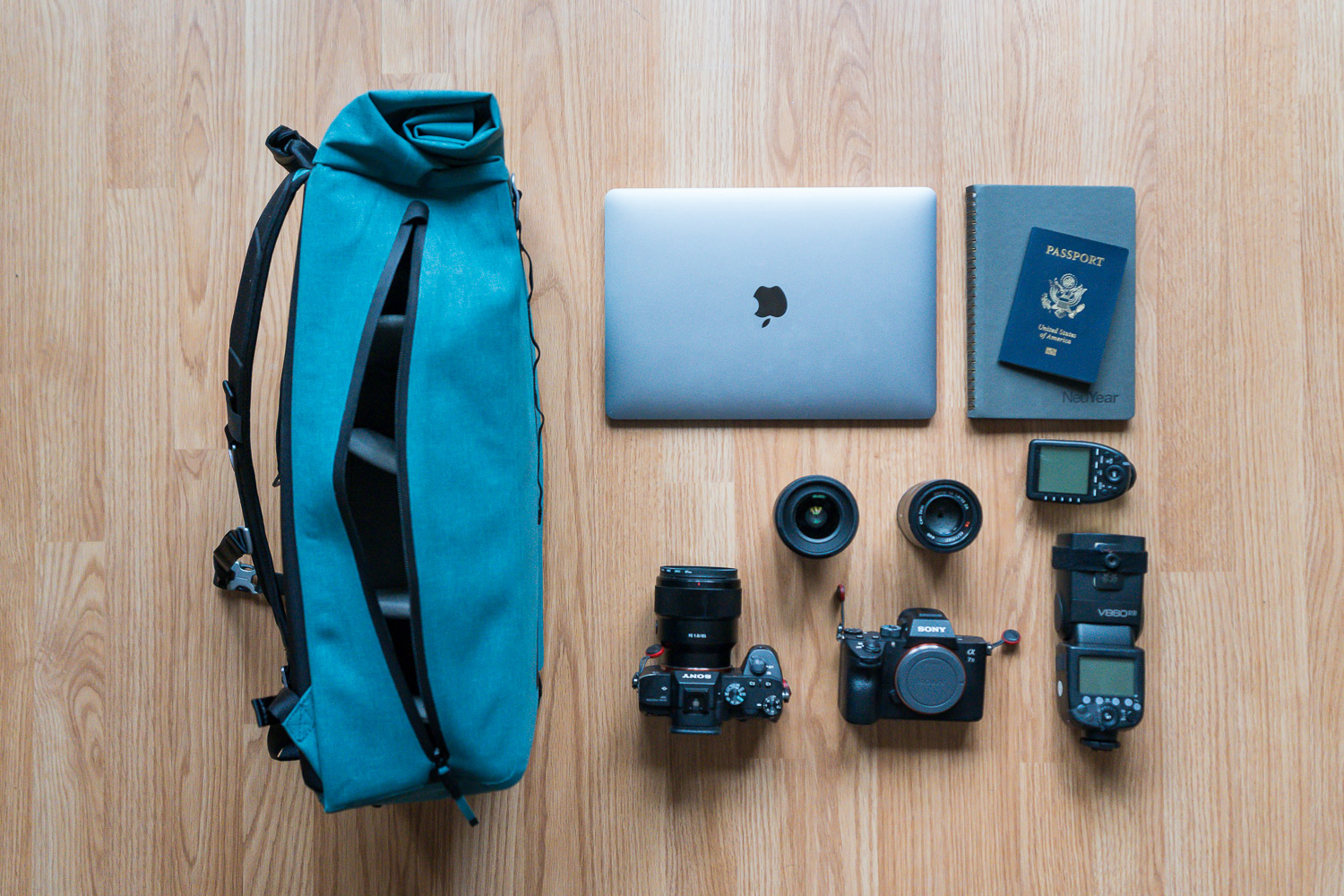
There are so many camera accessories but the basics include camera strap, tripod, other mounts, remote shutter release, and protective gear.
You’ll learn your specific needs as you encounter different situations but don’t forget to factor these little things into your budget. Camera accessories add up and some are essential items.
Drone
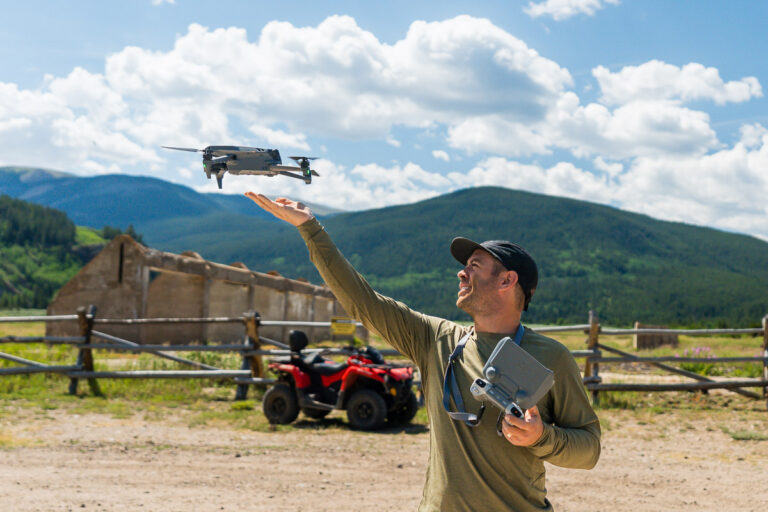
Again, this is a whole category of photography but having a drone might just open the door to certain jobs. Drone photos offer a unique perspective and because they are so widely available now, some clients expect you to offer it as an option.
Be sure to get your FAA Part 107 commercial license if you plan to make money flying your drone. Insurance is also an important step.
Computer & Software
Don’t forget you’ll need a computer and some processing software to process all those images you just took. I’ve been a fan of the MacBook Pro for it’s versatility and portability. Make sure you get some editing software to go with it. I prefer Adobe products, mainly Lightroom Classic.
In addition, many photographers might get some benefit out of the latest AI software.
Backup Drives
If you enjoy photography for any length of time, you’re going to accumulate thousands of images and will need some backup drives to ensure you don’t lose those images. Cloud storage isn’t quite cheap enough yet so I’d start with a basic external hard drive.
Make sure to employ the 3, 2, 1 backup strategy. 3 copies, 2 different storage media, 1 offsite copy.
Once you accumulate more data, you’ll likely want to get a RAID system. It gives you more peace of mind and scalability to store more images over time.
Summary of Criteria for Choosing Camera Gear
Thanks for making it through this post on criteria for choosing camera gear. I hope this article was helpful in choosing what photography equipment you need to consider when creating your professional photography equipment list. If you have any questions, be sure to leave a comment down below.
Don’t forget the free guide with even more detail and sample kits.
More Camera Gear Tips on the Blog
Next, check out more tips on the blog. Everything about photography equipment and if you don’t see something that interests you please let us know and we’ll try to cover it.
- 85mm Lenses
- Best Sony Cameras
- Mirrorless vs DSLR
- Drone Photography and Drone Accessories
- Sony 70-200 Review and Shooting Guide
- ND Filter Guide
- Travel Photography Gear List
- 35mm vs 50mm Lens Comparison
We are Marc and Brenda Bergreen, a husband and wife team of adventurous Colorado wedding, elopement, and adventure photographers. Above all our philosophy, love. adventurously. is the guidepost for everything we do. Links to Amazon are affiliate links.
Based in Evergreen, CO we travel throughout Colorado and beyond to capture adventurous love. Be sure to reach out and tell us your story.
In the meantime, remember to…

[mailmunch-form id=”412278″]