Best Camera Gear for Night Photography
I have always loved shooting the night sky. Whether for a landscape, commercial, or wedding photography project, capturing night photography can add a sense of drama to a body of work. Night photography requires a special set of skills as well as gear that is capable of shooting in low light. This article aims to identify the best camera gear for night photography.
Whether your goal is to learn night sky photography or simply improve the image quality of your pictures taken in low light, this post will help. I’ll help you find the perfect camera or the best one for your budget. When it comes to gear, we have to balance price and features. My real-world practical experience will be helpful here.
I’m going to talk through what I look for when reviewing cameras for night photography. Then I’ll talk a little about whether or not you need a special camera for night photography. Finally, I’ll share my top picks by both brand and budget.
What I Look for in the Best Camera Gear for Night Photography
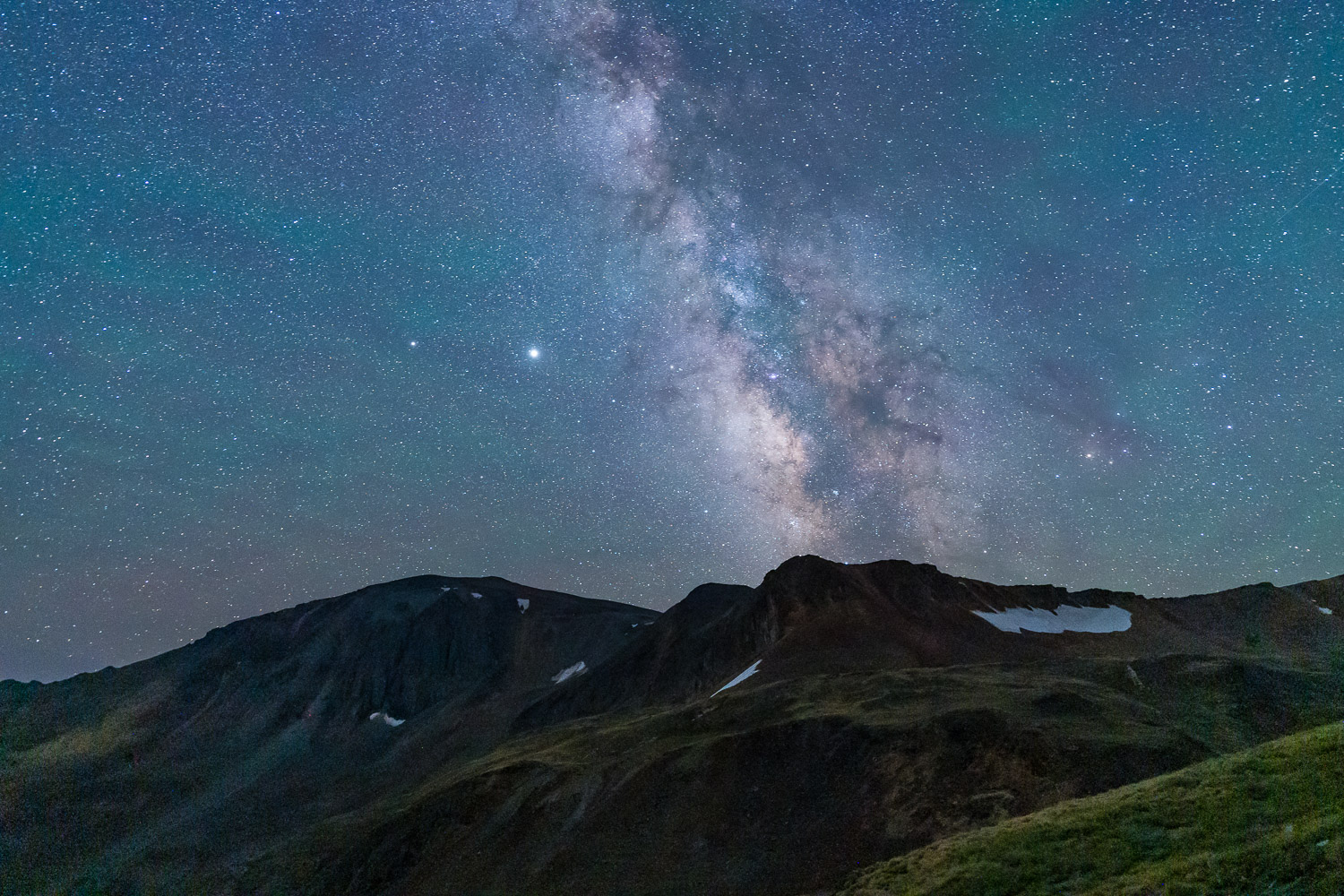
My goal for night photography is high-quality images which means that low light performance is key. Beyond low light performance, I consider weight and durability for portability during long shoots. Some of the challenges of night photography include shooting handheld, low light, digital noise, and capturing dynamic range.
The right gear can elevate your night photography enabling sharper, brighter, and more creative images. Below are some of the key features to look for in your night photography gear. We’ll talk through ISO, sensors, and resolution. Although you often get what you pay for, I hope to find a balance of price/value when choosing the best camera gear for night photography!
High ISO Performance and Low Noise
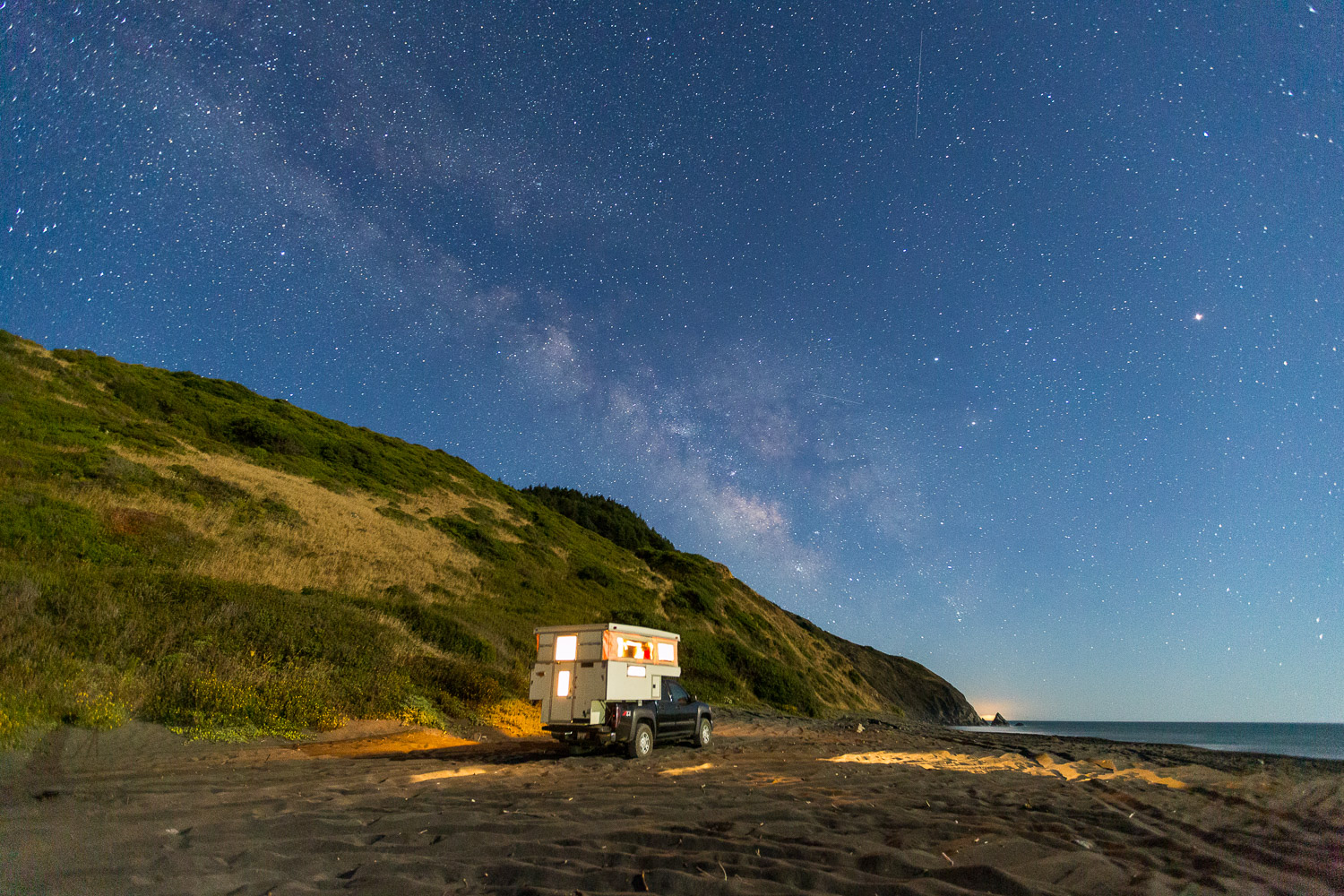
A camera with excellent high ISO performance ensures you can shoot in low light or near darkness without introducing excessive noise, which often diminishes image quality. Look for models capable of clean images at ISO 3200 or even ISO 6400. I’ve found those to be my most commonly used ISO Settings for dark skies. Cityscapes will probably be more often captured in the ISO 800-1600 range.
Full-Frame Sensors for Better Light Sensitivity
Full-frame sensors excel in low-light conditions because their larger surface area captures more light compared to smaller sensors, such as APS-C or Micro Four Thirds. This improved light sensitivity results in reduced noise and enhanced dynamic range, making them ideal for night photography. They also offer greater flexibility with shallow depth of field and improved detail retention in shadows and highlights.
Resolution
It used to be my belief that the higher the resolution, the worse the high ISO digital noise performance. However, I’ve come to realize that this is not exactly right. After comparing the Sony A7SIII, A7IV, and A7RV in the video below, I now believe the A7RV (the highest resolution camera of the three, to be the best for night sky photography). My comparison showed that even though the A7SIII may produce less noise, it has far less resolution and detail so the images viewed side by side with the A7RV will actually look less sharp/detailed. Watch this video for more explanation:
Why do you need a special camera for night photography?
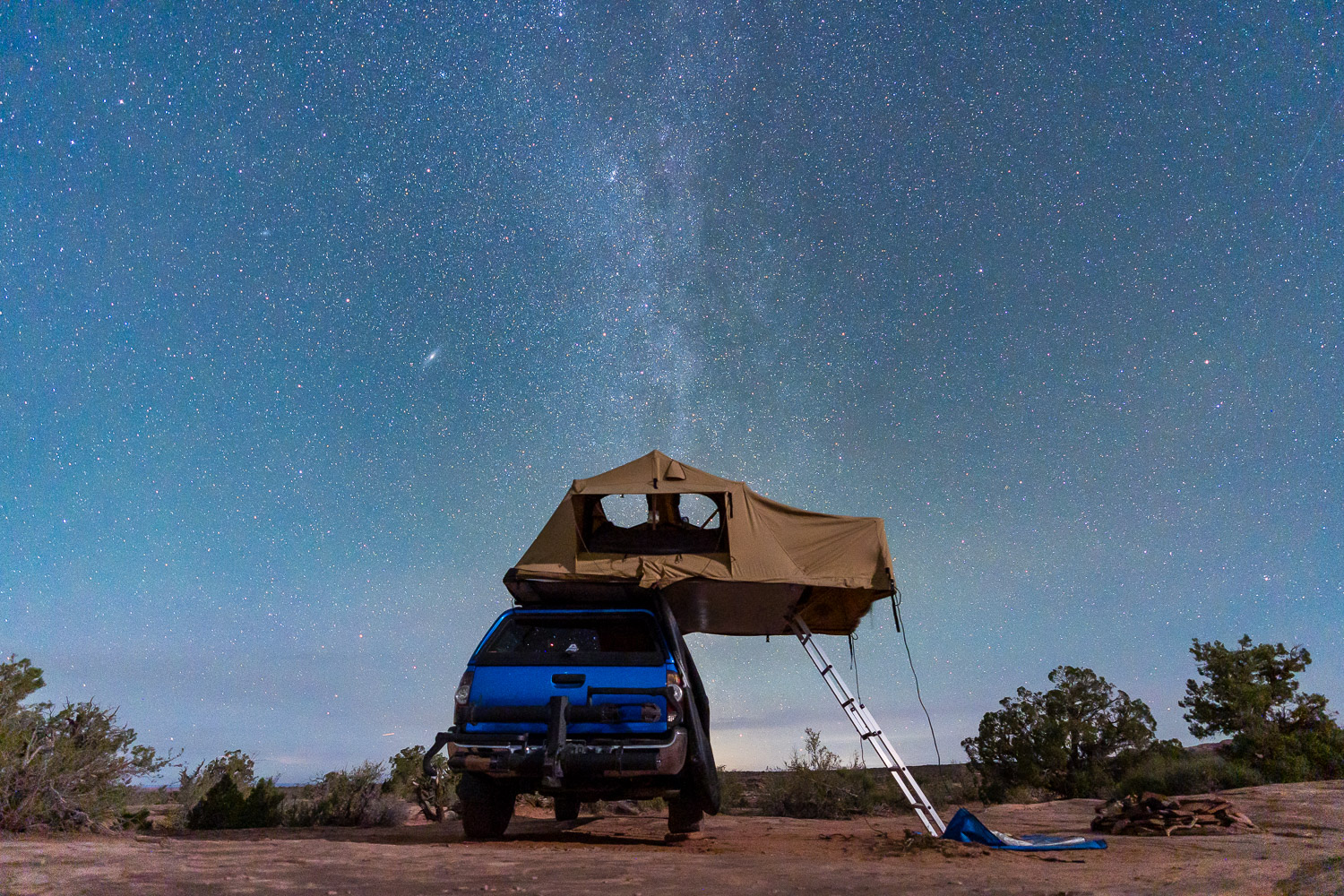
Night photography requires a camera with excellent low-light performance, advanced features such as high ISO capabilities, a wide dynamic range, and minimal noise in dark conditions. These features ensure that you can capture sharp, detailed images even in near-total darkness, which standard cameras may struggle to achieve these results.
This begs the question of if you need a full-frame camera. Full-frame cameras tend to perform better in low-light conditions, as their larger sensors capture more light, which results in less noise and better detail retention in darker areas. This makes them ideal for capturing starry skies, Milky Way shots, and other nightscapes.
However, crop-sensor (APS-C or Micro Four Thirds) cameras can still produce excellent results, especially if paired with fast, wide-aperture lenses. While they may not perform as well in extreme low-light situations as full-frame cameras, they are often more affordable and lightweight, making them a viable option for hobbyists or photographers on a budget. The key is to use a camera that has good high-ISO performance, a wide aperture lens, and the ability to handle long exposures.
When it comes to choosing the best gear for night photography it’s always a tough balance between cost and performance. Just starting out, you’ll likely want to get something affordable but as you develop your skills, better gear will make images easier to create.
How does a camera see in the dark?
A camera “sees” in the dark by using a combination of high ISO settings to amplify light, wide apertures to let in more light, and long exposure times to capture faint details. Advanced sensors in modern cameras also enhance light sensitivity, making it possible to capture clear and vibrant images in low-light environments.
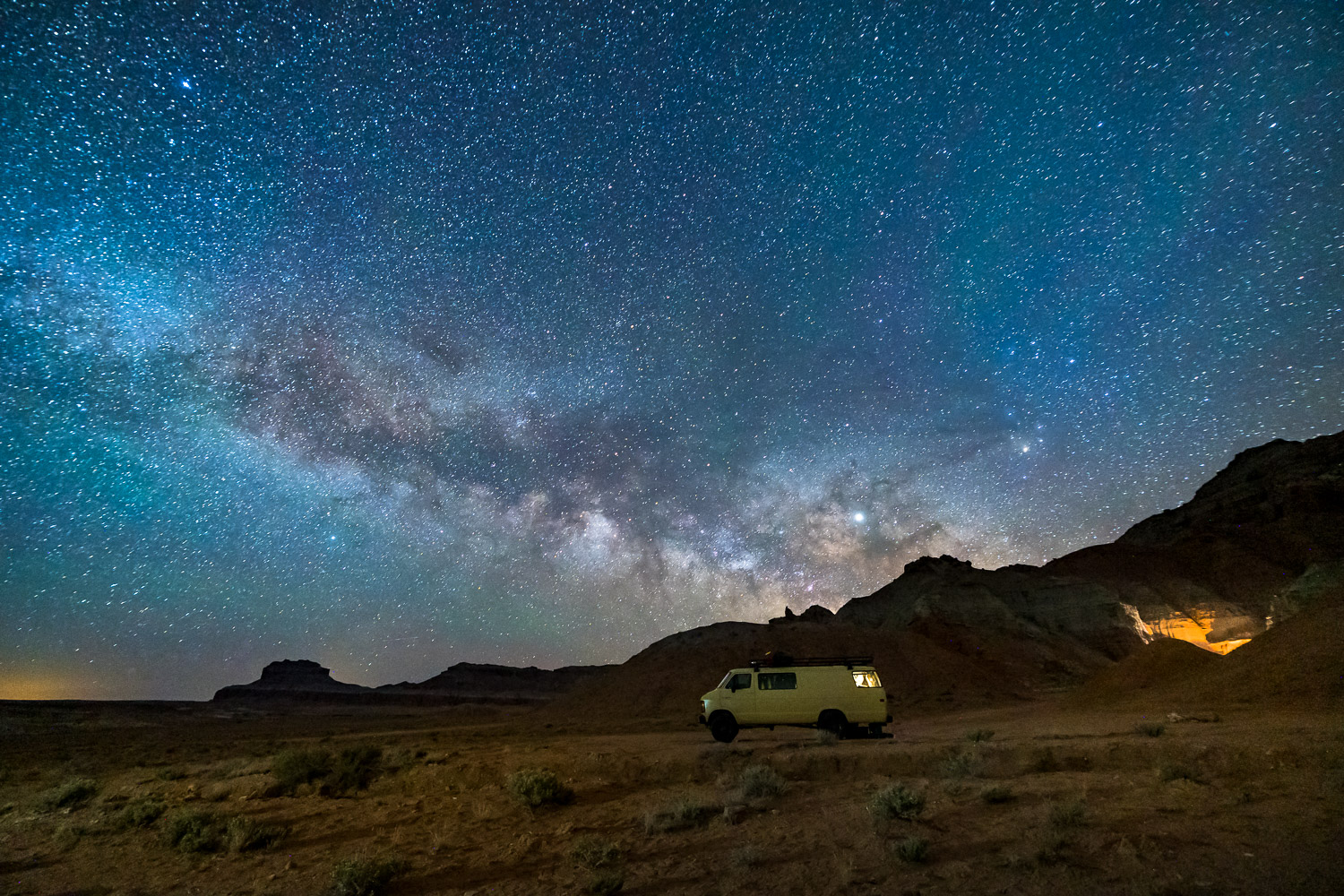
When it comes to night sky photography, a great camera will have better image quality allowing the night sky to really shine. While your eyes may see the stars, a 30 second shutter speed long exposure can allow the milky way to come to life in an image.
Do night photography cameras perform well in other conditions?
Yes, cameras designed for night photography typically excel in various conditions. Their superior sensors, dynamic range, and high ISO performance make them versatile for other types of photography, such as portraits, landscapes, and events. These cameras handle challenging lighting situations, making them reliable tools for diverse photography needs.
My Top Picks Overall for Night Photography
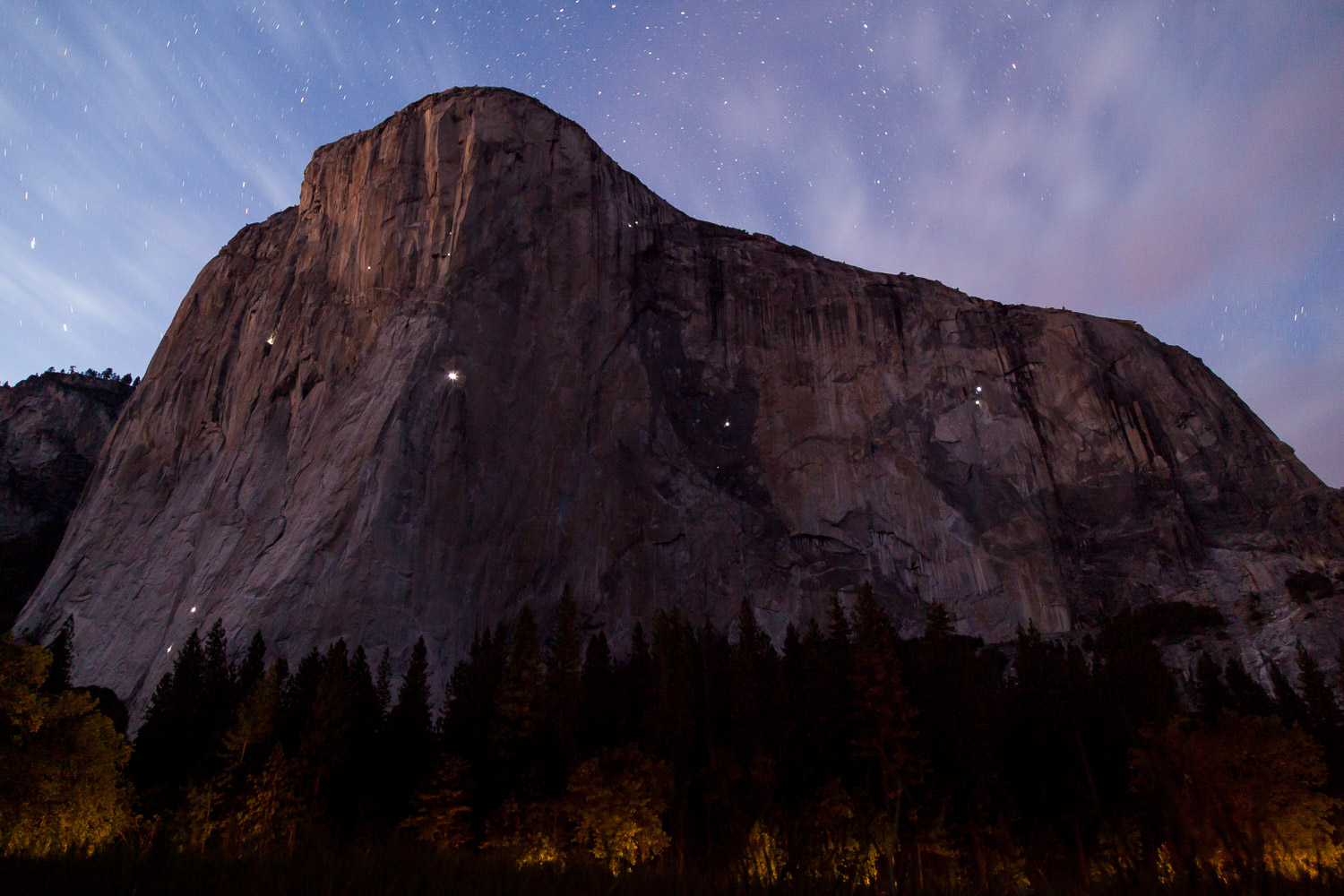
Are you ready to pick your night sky photography kit? I’ll start with my top pick overall. But then I’ll discuss some great options for various budgets. From there I’ll discuss options for different brands.
Whether you’re looking for the right lens for your full-frame camera or the highest image quality to get as much light out of that dark night sky as possible, I have ideas for you.
Best Cameras From Sony:
Sony A7RV – My top pick because of its high resolution and image quality
Sony A7IV – Another great option at a lower price point
Sony A7CII – A more compact and affordable version of the A7IV (same sensor)
Sony a6700 – My pick for a more compact and affordable APS C sensor
Sony A7SIII – Best for low light video but if has lower resolution sensor (not as good for photography)
Best Lenses From Sony:
Sony 14mm f/1.8 GM – Best full frame lens for capturing the milky way and wide landscapes at night
Sigma 14mm f/1.4 – An alternative to the Sony 14mm with slightly faster aperture
Sony 20mm f/1.8 G – More affordable full frame lens for wide dark landscapes
Sony 16-35mm f/2.8 GM II – A versatile lens that can also capture the night sky
Sony 11mm f/1.8 – Best for your APS-C sensor camera with an equivalent focal length of 16mm
Best Cameras for Low Light by Budget
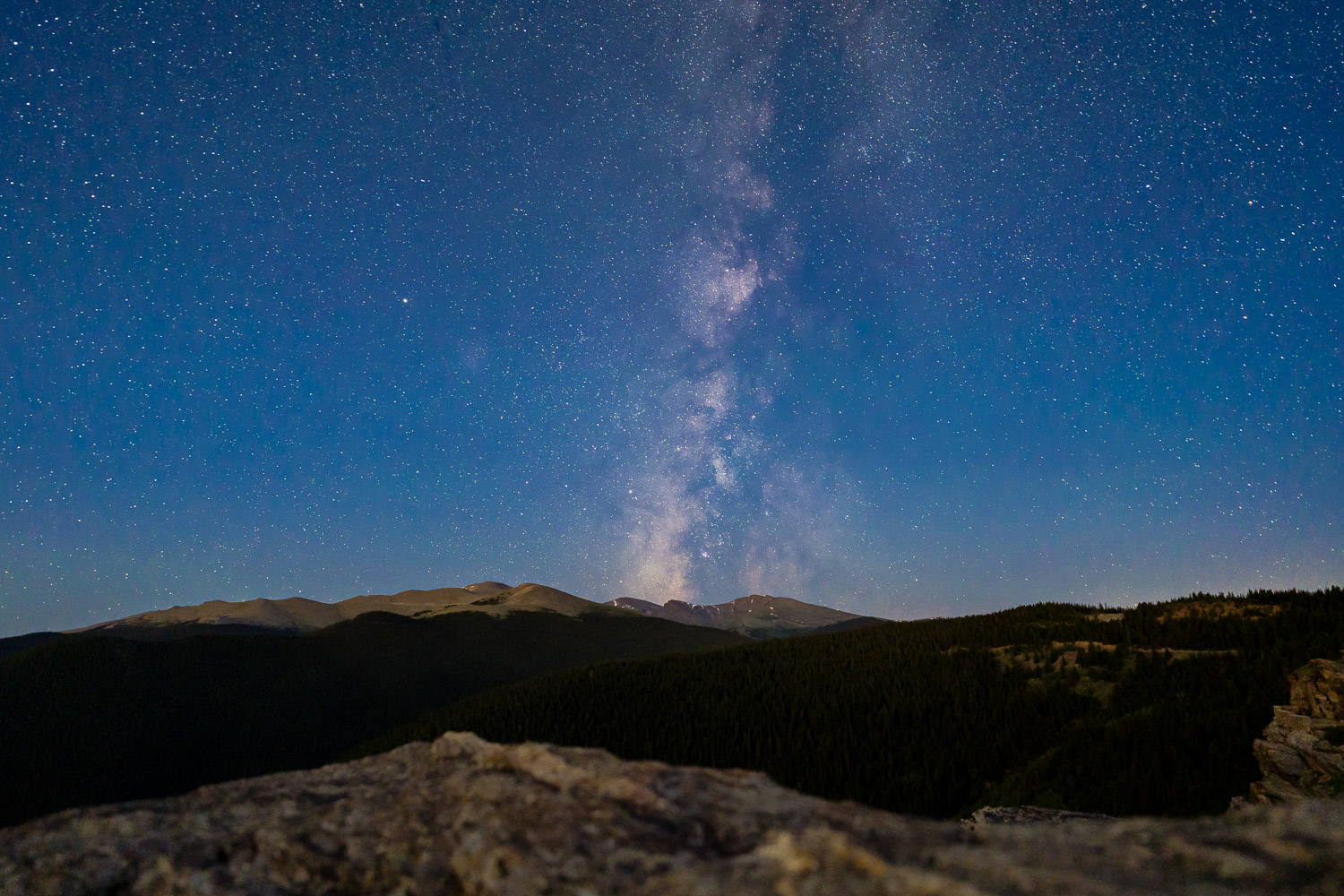
What cameras and lenses should you carry in your camera bag to have the best gear for night photography? Let’s talk about what options there are for low-light photography regardless of your budget. Low light photography means we need a good camera, but we also need an affordable camera.
Diving in here to the best cameras regardless of your budget.
Best Night Camera for Beginners
The best night sky photography camera for beginners is affordable while allowing you to capture incredible images.
iPhone – maybe you already have a late model iPhone and can get started with that
GoPro Hero 13 – late model GoPros have some pretty cool night features that can be fun to experiment with
Buy Used – if you’re on a budget and want a good inexpensive option, get a used camera. Sony mirrorless cameras all have pretty decent low light performance going back to some of the earliest models. Check out this video on the best camera under $1000
Best Upper Mid-Range Camera For Low Light
If you have a bigger budget and want more capabilities including even low-light video recording, here are some great picks.
Camera & Lens combo from Sony:
Sony A7IV – Great all around camera with solid low light and video performance
Sony 20mm f/1.8 G – Sharp and fast lens that is great for night photography
Camera & Lens combo from Canon:
Canon R6 Mark II – Great all around camera with solid low light and video performance
Rokinon 14mm f/2.8 – affordable wide angle autofocus lens with relatively fast aperture
Best Lenses for Night Photography
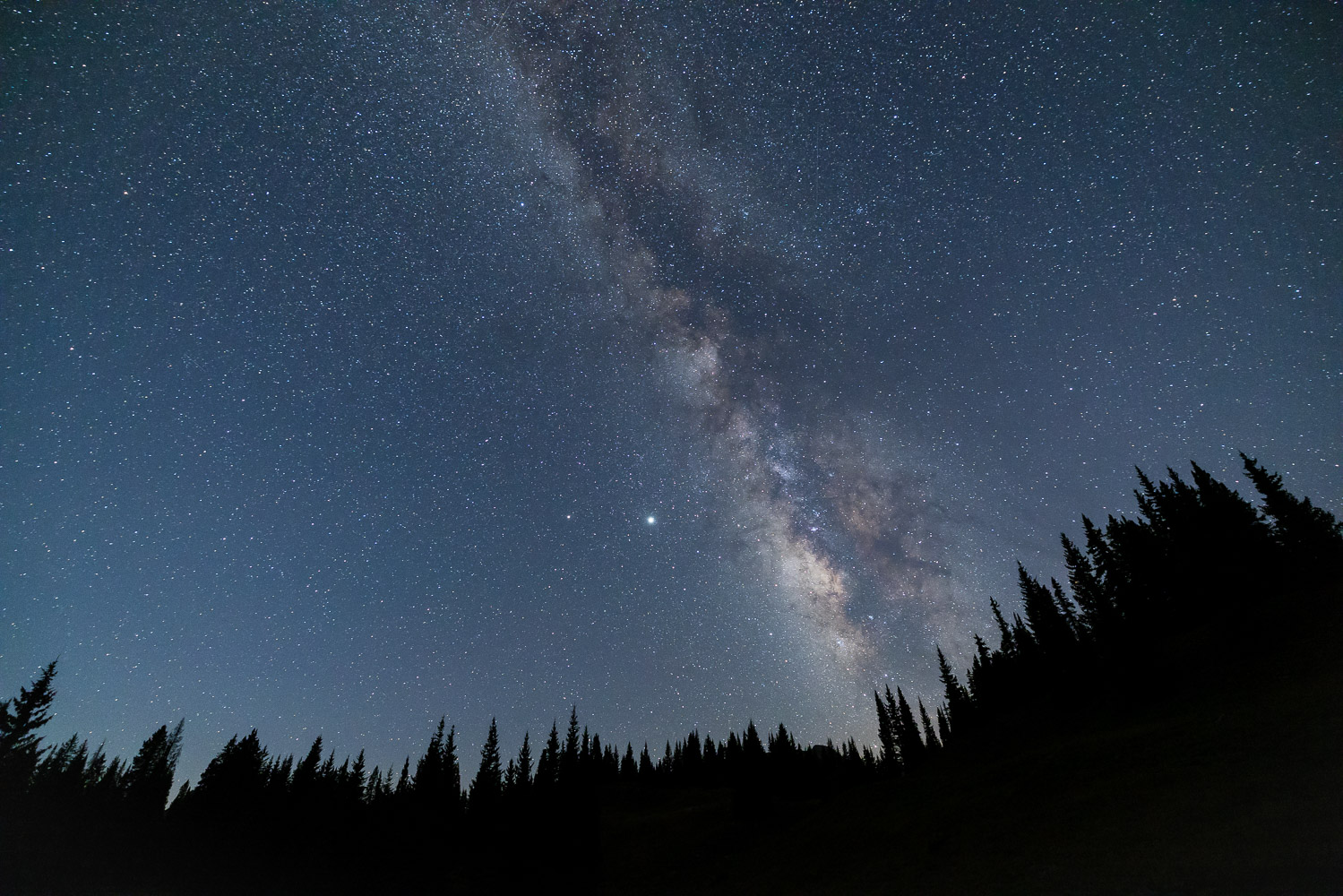
How do we choose the best lenses for night photography? Let’s talk about aperture, focal length, and image quality. These factors will help you get the perfect lens to add to your kit. Remember, finding the best camera gear for night photography is a process!
Wide Aperture Lenses
Wide aperture lenses are essential for gathering light; look for f/1.4 to f/2.8 lenses.
Lenses with wide apertures, such as f/1.4 or f/2.8, are indispensable for night photography because they let in more light, reducing the need for high ISO settings and long exposures. This allows you to capture sharper stars because beyond 25-30 seconds you’ll start to see movement due to the rotation of the earth.
Night Photography Lenses By Brand: Canon, Sony, and Canon DSLR
Best Lenses for Canon Mirrorless Cameras (RF Mount – Full Frame Mirrorless)
Best Lenses for Sony Mirrorless Cameras (FE Mount – Full Frame Mirrorless)
Best Lenses for Canon DSLR (EF Mount – Full Frame DSLR)
Tripods for Night Photography
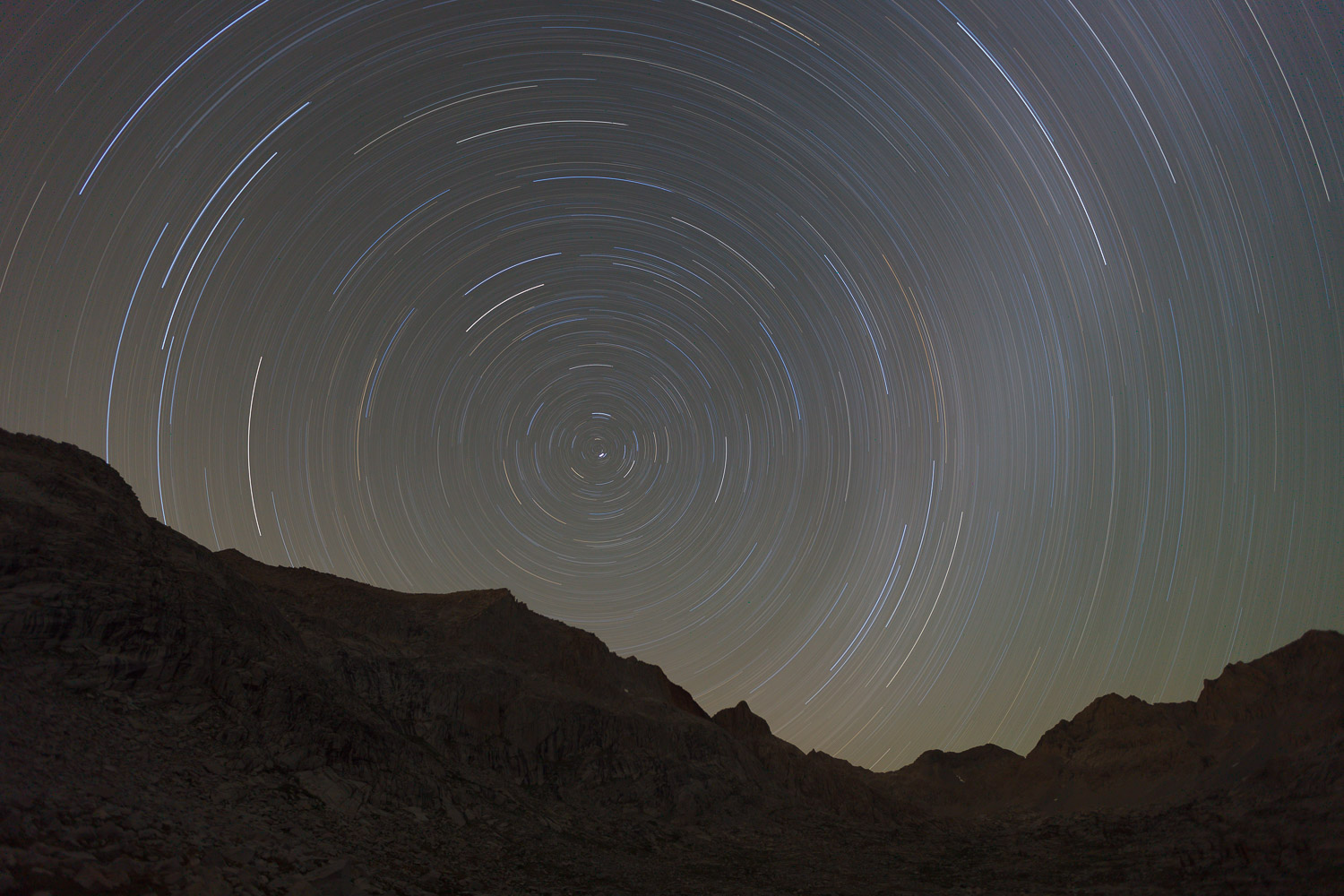
A tripod is one of the most essential pieces of gear for night photography, providing your camera sensor the stability needed for long exposure shots. Without a tripod, even the slightest camera shake can ruin your image, especially when capturing detailed shots of stars, light trails, or cityscapes in low-light environments with long shutter speeds.
Investing in a good tripod is a game-changer for night photography. Whether you’re shooting the stars, cityscapes, or light trails, the tripod will provide the necessary stability and support to achieve sharp, noise-free images. Choose one that fits your specific shooting needs, balancing portability, stability, and versatility.
You can get the job done with a cheap tripod (trust me I’ve been there) but a nice tripod is so nice to have both for stability but also ease of operation in the dark.
Features to Look For
Lightweight & Portable: When you’re out shooting at night, especially in remote locations, portability is key. A lightweight tripod is easier to carry on long shoots or hikes. Look for carbon fiber tripods, which are both lightweight and sturdy, making them ideal for nighttime photography on the go.
Sturdy Build: Stability is essential, particularly in windy conditions or uneven terrain. A tripod with a sturdy build and adjustable legs will ensure the camera stays secure, even with heavy gear. Tripods with thicker, more robust legs are typically more stable but may sacrifice portability.
Adjustable Legs and Ball Heads: For maximum versatility, choose a tripod with adjustable legs that can extend and lock into place. Some tripods also offer an independent leg spread, which allows for greater flexibility when shooting on uneven ground. A ball head is ideal for quick adjustments to framing and angle without compromising stability.
Ability to Handle Weight: Consider the weight of your camera setup when choosing a tripod. Heavy full-frame cameras with large lenses will require a tripod with a higher weight capacity. Ensure the tripod can support your camera and lens combo without tipping or wobbling during long exposures.
Too many leg sections: Generally I would avoid tripods with more than 3 leg sections. Tripods with four or more leg sections start to feel annoying to set up and they are less sturdy. Also avoid extending the top section too much. Cheap travel tripods will claim a large max height but you don’t want to turn 14 knobs to get a tripod to eye level.
Other Considerations
Height and Flexibility: A tripod should be tall enough for comfortable shooting but also allow for low-to-the-ground setups when shooting wide-angle landscapes or star trails. Many tripods come with a center column that can be flipped or lowered to get a wider range of shooting angles.
Vibration Dampening: Some tripods are designed with features that reduce vibrations, such as rubberized feet or dampened center columns, which can be especially useful when shooting in windy conditions or on uneven surfaces.
Center Column Hook: make sure the tripod has a hook on the center column so you can hang some weight (or a camera bag) to create more stability.
Types of Tripods
Traditional Tripods: These are classic, three-legged designs, usually made of aluminum or carbon fiber. They are sturdy and reliable for most night photography needs but may be heavier for carrying long distances.
Travel Tripods: Lightweight and compact, these tripods are designed for photographers on the go. They are generally smaller when collapsed but can still offer solid stability for night photography in most scenarios. Beware of ultralight versions, having your camera rest on toothpicks is never a good idea.
My Tripod Recommendations
Nice Compact but Sturdy Manfrotto Carbon Option (name brand so you know you can trust it)
Accessories for Night Photography
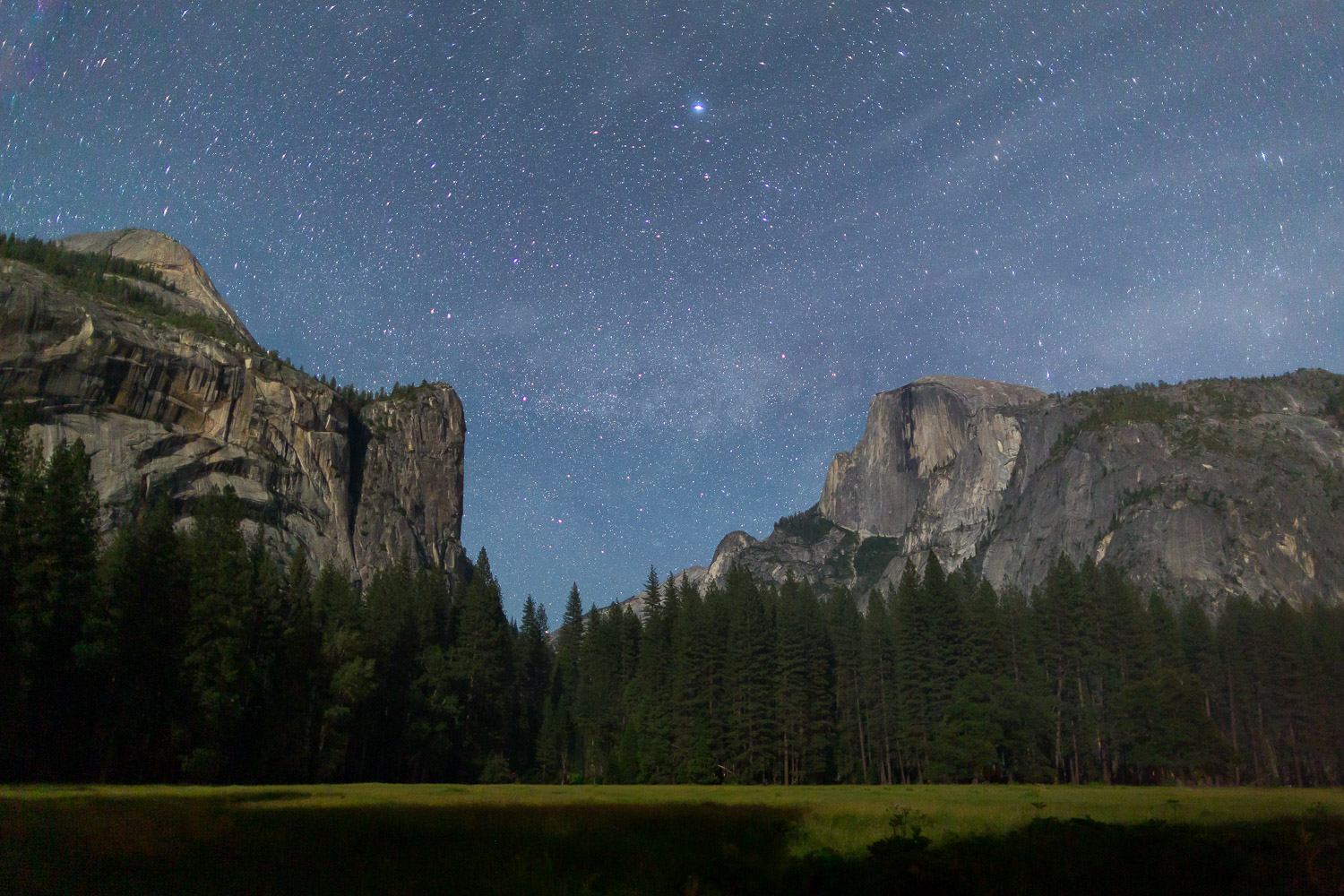
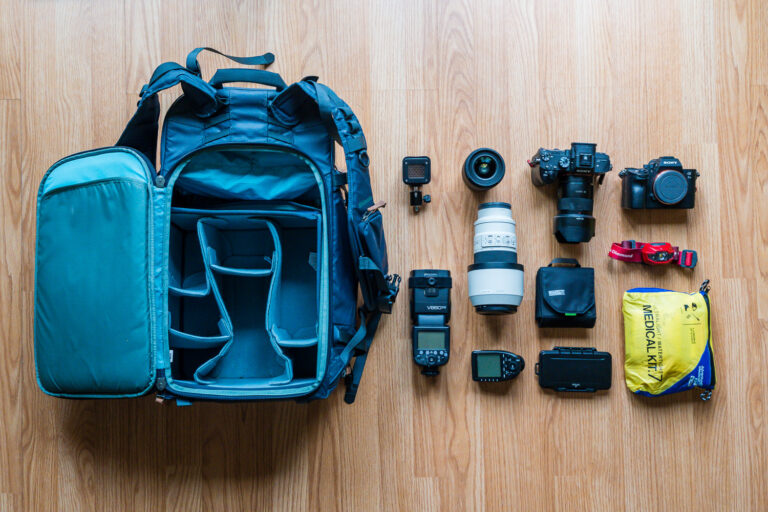
While a camera and lens are the main tools for capturing stunning night photos, the right accessories can significantly enhance your shooting experience and improve the quality of your images. From eliminating camera shake to adding creative effects, accessories are essential for achieving professional-level results in low-light environments. Combine your accessories with the best camera gear for night photography and you’ll be taking great images of the night sky in no time!
Night photography often involves long exposure times, remote locations, and unpredictable conditions. Accessories such as remote shutter releases, extra batteries, and filters can address these challenges, ensuring smoother shooting sessions and better results. They also allow you to get more creative with your compositions, whether you’re painting with light, capturing star trails, or enhancing contrast in your nightscape shots.
Accessories are a crucial part of night photography, providing the necessary tools to ensure a smooth, successful shoot. Whether you’re stabilizing your camera, controlling exposure, managing light, or keeping your camera bag and gear safe and functional, the right accessories can take your night photography to the next level.
Remote Shutter Release
A remote shutter release is essential for reducing camera shake when taking long exposure shots. Even the tiniest movement caused by pressing the shutter button can blur your image, especially in low-light settings. Using a remote release ensures that your camera remains completely still during the exposure process, leading to sharper, clearer photos.
Some people prefer to use manual mode with a 2-5 second timer but usually you won’t be able to access bulb mode for extended star trail photos without a remote shutter release.
There are two types of remote shutter release. The wired shutter release is simple and reliable. These devices plug directly into your camera, allowing you to trigger the shutter without touching the camera body. The Wireless Shutter Release is perfect for remote triggering without the risk of disturbing the camera setup, especially useful when shooting long exposures of moving elements like stars or light trails.
External Lighting
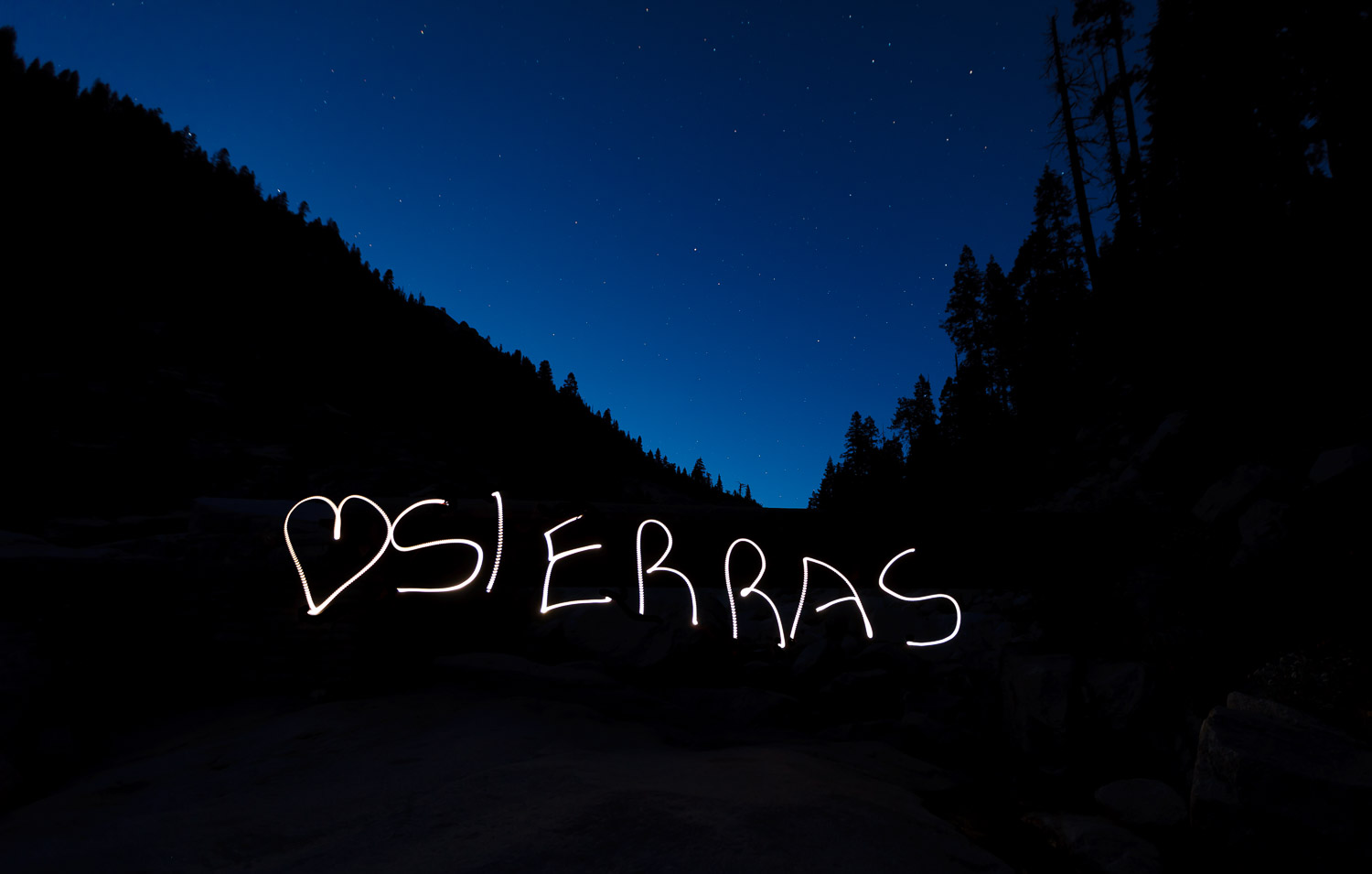
In night photography, external lighting can be used for light painting, illuminating foregrounds, or creating dramatic effects. Since you’re working in the dark, an additional light source is often necessary if you want to illuminate any part of your scene. I prefer to use things like campfires, timing with the setting partial moon, or other natural/logical sources like headlamps. On the other hand, many people do very cool things when it comes to light painting.
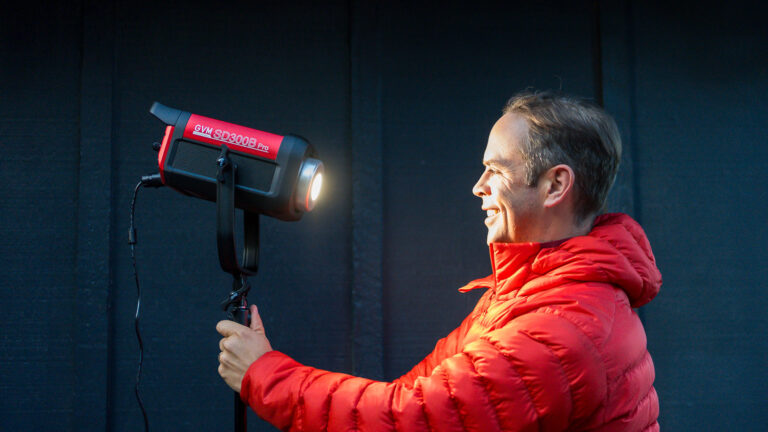
LED Lights are portable, adjustable, and can be used to illuminate subjects in a controlled way without overwhelming the scene with harsh brightness. Look for rechargeable, lightweight LED panels. Flashlights or Headlamps are great for quick setups or focusing. I use a headlamp to nail the focus. Consider a headlamp with a red light setting, which preserves your night vision.
My Favorite Headlamp – super powerful and solid for adventures
My Favorite Small LED Light – compact and lightweight with good performance for its size
My Favorite Bigger LED Light – much more powerful but still has great battery life
Filters
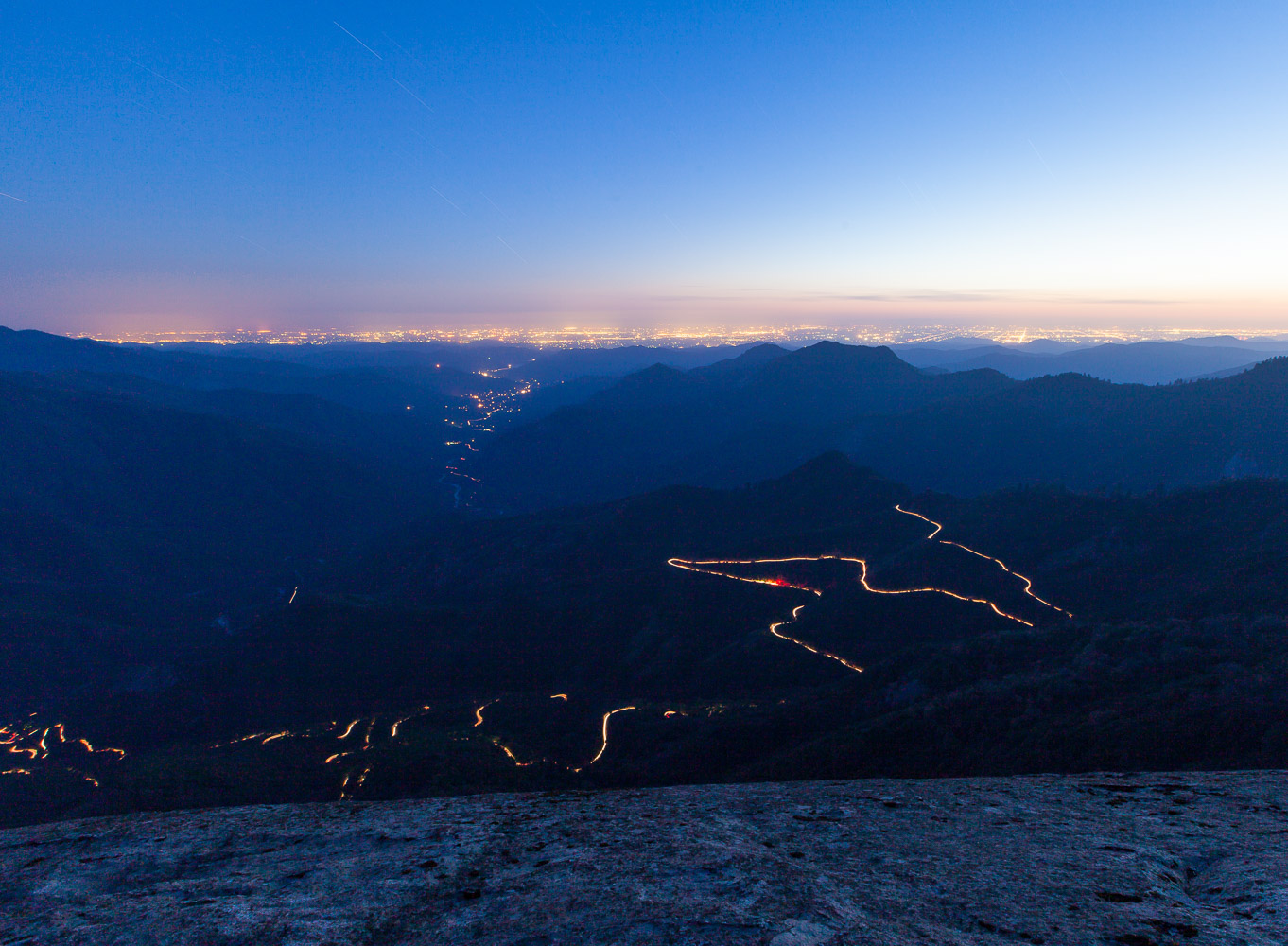
Filters help you control the light that enters your camera, which is especially important in night photography where light sources can be either too bright or too dim. Certain filters can also enhance your creative control, reduce light pollution, or extend exposure times for light trails and star captures.
Neutral Density (ND) Filters are useful for long exposure shots in light-polluted environments or for capturing smooth, flowing water in cityscapes or landscapes at night. ND filters reduce the amount of light entering the lens, allowing you to use longer exposures without overexposing the image.
Light Pollution Filters help reduce the impact of artificial light on your night sky shots, especially in urban environments. They block certain wavelengths of light, allowing stars and celestial bodies to shine through more clearly. These are great if you have lots of light pollution but still want to capture the stars.
Polarizer Filters are primarily used in daylight, a polarizer can be beneficial in reducing reflections in urban nightscapes or water bodies under low light. They often act like a light ND filter, reducing the light to the sensor by 1-2 stops.
Extra Batteries
Night photography often requires extended shooting times, especially during long exposures or astrophotography sessions. The cold weather at night can also drain your camera’s battery much faster than usual. Having extra fully charged batteries is essential to avoid interruptions during your shoot.
Keep batteries in a warm pocket to prevent them from draining quickly in cold environments. Consider carrying a portable power bank or charger, especially if you’re shooting in remote locations without access to power sources.
Star Trackers
A star tracker is an advanced accessory for capturing sharp stars during long exposure astrophotography. These devices help track the movement of the stars across the sky, allowing you to take longer exposures without star trails or blurring. Star trackers are particularly useful for Milky Way and deep-sky photography, ensuring you get crisp, detailed shots of the night sky.
Star trackers are mounted on a tripod and move the camera to compensate for Earth’s rotation. This allows you to take longer exposures without the stars appearing as trails, maintaining the sharpness of distant celestial objects.
Here is a relatively affordable Star Tracker on Amazon
Summary of Our Guide to the Best Camera Gear for Night Photography
I hope this post helped you find a great camera for your night photography goals. Finding the best gear for night photography is an evolution and you will likely have several iterations in your kit before you dial in on the perfect setup. Shooting in low light is a fun challenge that’s getting easier as the gear gets better. Night sky photography is a fun way to challenge your photography skills and test the capabilities of your camera.
I hope you get out and enjoy some quiet evenings in the outdoors!